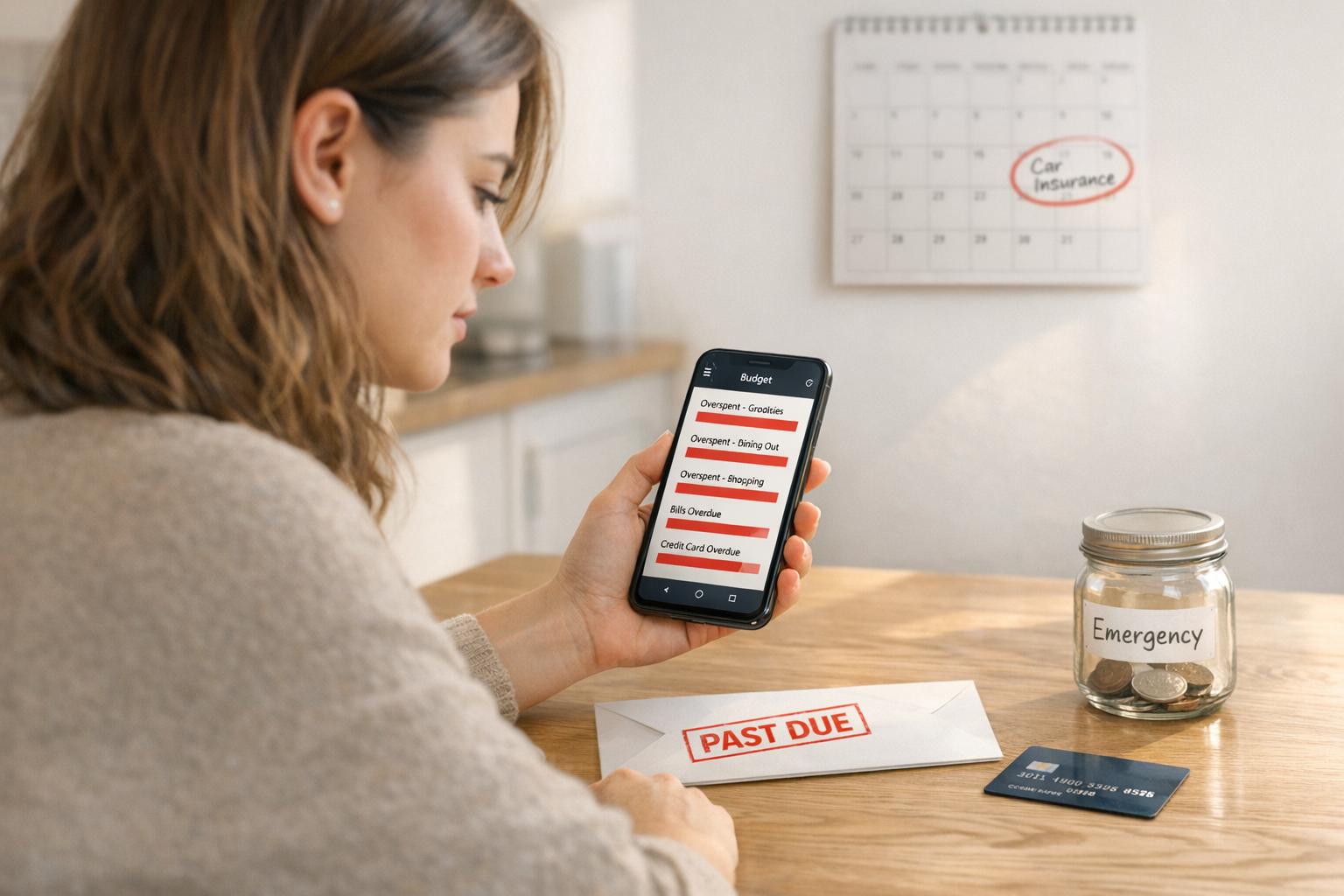
Your budget is supposed to help you manage your money effectively, but when it doesn't align with your actual expenses, financial problems can pile up. Here are five signs that your budget may be failing:
- You’re overspending in key categories: Regularly exceeding limits in areas like groceries or dining out signals your budget doesn’t reflect reality.
- You’re maxing out credit cards monthly: Relying on credit for essentials means your income isn’t covering your expenses.
- You’re struggling to pay bills on time: Late payments or juggling bills point to cash flow issues.
- You have no emergency savings: Without a financial cushion, unexpected costs can lead to debt.
- You forget about irregular expenses: Annual costs like insurance or holiday spending can disrupt your finances if unplanned.
These red flags can lead to debt, stress, and financial instability. To fix this, start tracking your spending, adjust your budget to match real expenses, and prioritize building savings. Tools like Monefy can help you stay on top of your finances by tracking expenses, setting reminders, and managing savings goals.

5 Warning Signs Your Budget Isn't Working and How to Fix Them
Sign 1: You're Overspending in Your Budget Categories
A budget only works if it aligns with your actual spending habits. If you consistently overspend in certain categories, it's a sign your plan isn't working. For instance, if your grocery budget is set at $400 but you regularly exceed it, or your dining-out limit is $150 and you're always going over, your budget isn't matching reality. This kind of overspending can force you to pull funds from other categories or even dip into savings - neither of which is sustainable.
How to Spot Overspending
The signs of overspending are usually easy to spot. Your account balance might drop faster than expected, and you could find yourself relying on credit cards just to cover essentials like groceries or gas. As Bill London, a partner at Kimura London & White LLP, puts it:
"If you've budgeted but you still end up having very little or nothing at all at the end of the month anyway, what you've budgeted aren't actual behaviors but dreams."
Many people underestimate their day-to-day costs. For example, you might budget $300 for groceries when you actually need closer to $450, or plan for $100 in gas when your commute requires more. On top of that, impulse purchases can quickly derail your budget. Research shows the average consumer spends $314 each month on unplanned buys, and housing, food, and transportation alone account for about 63% of total spending. If you're consistently overspending in these major areas, it's a clear indicator that your budget needs a reality check.
Acknowledging overspending is the first step toward making meaningful adjustments.
Solution: Track Your Spending in Real-Time
To regain control, you need a clear view of your spending habits. You can’t make changes if you don’t know where your money is going. Velma Kyser, Program Manager at the Financial Empowerment Center, emphasizes this point:
"You can't cut back on what you don't know you are spending."
Using tools like Monefy's expense tracking features can help you monitor your spending as it happens. By logging every purchase immediately, you’ll see exactly how much is left in each category for the month. This real-time awareness can act as a deterrent to overspending. For example, if you notice you only have $75 left in your dining-out budget halfway through the month, you might be more inclined to cook at home.
You can also set up alerts to notify you when you're nearing your limits in specific categories. If your grocery budget is $400 and you're close to hitting that amount, an alert gives you the chance to adjust before you overspend. Tracking your expenses daily ensures your budget stays grounded in reality and helps you avoid financial surprises.
Sign 2: You're Maxing Out Your Credit Cards Every Month
If you're consistently maxing out your credit cards, it's a clear sign that your income and expenses are out of sync. This pattern suggests your monthly earnings aren't enough to cover your actual costs. For instance, if you're repeatedly hitting your credit limit right after making a payment or constantly switching between cards to find available credit, it's a red flag. When your paycheck can't stretch to cover essentials like groceries, gas, or utilities, and you're leaning heavily on credit cards, it's time to reevaluate your budget.
This behavior often leads to mounting debt, thanks to high interest rates. As of August 2023, the average annual interest rate on credit cards stood at 21.19%, while the average rate for existing balances was even higher at 22.77%. Here's an example: A $5,000 balance with a minimum payment of $200 per month would take over two and a half years to pay off, costing more than $6,000 in total. The interest alone can trap you in a cycle where your balance grows, even if you stop making new purchases.
Warning Signs of Credit Card Overuse
There are specific behaviors that signal trouble with credit card use. Tim Maxwell, a personal finance writer, explains:
"If you're consistently maxing out your credit cards, it could be a red flag that you're overspending. Additional signs of trouble are if you're maxing your card out soon after making a payment or if you're juggling between your cards to find which has enough credit for new purchases."
Another major warning sign is making only the minimum payment. While it might seem manageable at first, this approach can trap you in a debt cycle where interest charges keep your balance high. Keep in mind that credit utilization makes up 30% of your credit score, and payment history accounts for another 35%.
Solution: Review Your Spending Patterns
If these warning signs sound familiar, it's time to take action. Start by tracking every transaction for a month, no matter how small. Compare your fixed expenses (like rent or utilities) with your variable spending (like dining out or entertainment). You might discover you're overspending in certain categories or that unnoticed subscriptions are quietly draining your funds.
To stay organized, consider tools like Monefy, which offers multi-device syncing so your entire household can monitor spending together. By logging purchases immediately, you’ll see exactly how much remains in each budget category. The app’s analysis features automatically sort your transactions, helping you identify problem areas without extra effort.
Once you've pinpointed where you're overspending, try using only your debit card or cash for discretionary purchases. This approach naturally limits your spending. If you’re carrying credit card debt, aim to pay more than the minimum each month to reduce your principal faster. The ultimate goal is to transition from relying on credit to cover gaps to building a budget that works within your actual income.
Sign 3: You Can't Pay Bills on Time
Struggling to pay bills on time is often a symptom of deeper cash flow issues. If you're constantly juggling which bill to prioritize or only managing minimum payments, it's a clear signal that your income and expenses aren't in sync. Late payments and past-due notices become regular occurrences when your budget fails to account for your actual spending patterns.
For many Americans, limited cash flow leaves little room for unexpected expenses. Living paycheck to paycheck means even minor disruptions, like a delayed direct deposit or an emergency repair, can lead to late payments, overdraft fees, and escalating stress. This cycle makes it even harder to regain control of your finances.
What Causes Cash Flow Problems
Cash flow issues often stem from budgets that don't reflect real spending habits. Everyday costs like groceries, gas, and commuting can easily be underestimated. Financial experts recommend keeping housing costs below 28% of your gross income to maintain balance. Yet, when rent or mortgage payments exceed this guideline, it’s tough to cover other essentials, such as utilities or insurance.
Irregular income creates further challenges. Freelancers, commission-based workers, and small business owners often face unpredictable earnings. Without a financial cushion, even a single lean month can upend a rigid budget. As of September 2023, the U.S. personal savings rate was just 3.7%, leaving many without the reserves needed to manage these fluctuations. Additionally, irregular expenses like annual car insurance premiums or quarterly HOA fees can catch you off guard, creating an immediate financial crunch.
Paul Miller, CPA and Founder of Miller and Company, LLP, highlights the importance of aligning your budget with your lifestyle:
"If your monthly paycheck isn't covering things like groceries, utilities or gas and you're regularly pulling from your savings or running up your credit cards, that's a red flag. It means your budget isn't aligned with your actual cost of living."
Solution: Manage Income and Set Bill Reminders
To regain control, start by tracking every expense for a month - everything from rent to small, daily purchases like coffee. This exercise often reveals how unplanned spending can eat into the funds needed for bills. On average, housing, food, and transportation make up about 63% of American household spending. Understanding these patterns can help you allocate resources more effectively.
If your income fluctuates, build a financial cushion during higher-earning months to cover essential bills during slower periods. Hillary Seiler, Certified Financial Education Coach and Founder of Financial Footwork, emphasizes the importance of consistency:
"The moment you try to tackle your budget in one sitting, you're setting yourself up for failure… just do the reps like a training program."
Once you’ve gained clarity on your spending, automate your payments and set reminders to avoid missed deadlines. Tools like Monefy can help by sending alerts for upcoming bills and syncing account balances across devices. For consistent monthly bills - like utilities or insurance - automated payments reduce stress and eliminate errors. For variable expenses, Monefy's balance notifications ensure you have enough funds before a withdrawal, helping you avoid overdraft fees and the stress of last-minute account juggling.
sbb-itb-02fd20a
Sign 4: You Have No Emergency Savings
Living paycheck to paycheck without a financial safety net can leave you exposed to unexpected expenses. Whether it’s a broken water heater, an unforeseen medical bill, or a car repair, a lack of emergency savings can quickly turn into a financial crisis. Alarmingly, over half of Americans don’t have enough saved to cover a $1,000 emergency expense. This often leads to reliance on high-interest credit cards, which can create a cycle of debt.
The Consumer Financial Protection Bureau highlights this issue:
"Without savings, a financial shock - even minor - could set you back, and if it turns into debt, it can potentially have a lasting impact."
Without an emergency fund, unexpected costs can derail your financial plans. With credit card interest rates averaging around 16%, using them during emergencies becomes a costly solution.
How to Recognize a Savings Problem
If unexpected expenses routinely force you to rely on credit, it’s a sign your budget isn’t prioritizing savings. For instance, using credit cards to cover everyday essentials like groceries or gas - or feeling financially strained at the end of every pay period - indicates a lack of a financial cushion. Another warning sign is withdrawing from long-term savings or retirement accounts to cover routine bills. This points to a budget that doesn’t account for emergency savings.
Paul Miller, CPA and Founder of Miller and Company, LLP, puts it simply:
"If you've been trying to save for a vacation, pay off debt or build an emergency fund and nothing's growing, it's likely your budget isn't prioritizing those goals."
Experts suggest having an emergency fund that covers three to six months of living expenses. Yet, with 57% to 64% of U.S. adults living paycheck to paycheck, many find it challenging to recover from income loss or unexpected bills without compromising their larger financial goals.
Solution: Build and Track Your Savings
Start building an emergency fund by treating savings as a fixed monthly expense. Pay yourself first - set aside $50 or $100 monthly through automatic transfers from your checking account to a savings account. Many employers even allow direct deposit splits, so a portion of your paycheck can go straight into savings.
If saving several months’ worth of expenses feels daunting, begin with a smaller goal, like $500 to $1,000. This amount can cover minor emergencies, such as a car repair or a medical bill. Whenever you receive extra money - like a tax refund, bonus, or cash gift - deposit it directly into your emergency fund to grow it faster without disrupting your usual budget.
Consider using tools like Monefy to set and track savings goals. For example, you could set a target like “Save $2,000 for emergencies by December 31st,” and let the app notify you as you reach milestones. Monefy syncs across devices, so you can monitor your progress anytime. Keeping your emergency fund in a separate account also helps reduce the temptation to spend it on non-essentials. With a clear plan and the right tools, you can steadily grow your savings and gain peace of mind.
Sign 5: You're Forgetting About Irregular Expenses
While it's easy to focus on regular monthly bills like rent, utilities, and groceries, ignoring irregular expenses can throw your finances off balance. These are the costs that only pop up once or twice a year - things like property taxes, car registration, annual insurance premiums, or holiday gifts. When several of these expenses hit at once, they can leave you scrambling for cash or relying on credit cards.
Jen Swindler, CFP and Senior Wealth Manager at Vincere Wealth Management, highlights this common pitfall:
"One of the biggest mistakes I see many clients make is failing to plan for 'revolving' expenses – known but irregular expenses such as Christmas gifts, birthdays, vacations, vet checkups, annual fees... When several of these revolving expenses hit in the same month, they can derail your progress."
The trouble doesn’t stop at temporary cash flow issues. Forgetting these costs can drain your emergency fund or force you to dip into long-term savings. Considering that only 63% of U.S. adults can cover a $400 emergency expense in cash, adding unexpected irregular costs to the mix can create serious financial stress. Let’s take a closer look at some of the irregular expenses that often catch people off guard.
Common Irregular Expenses People Overlook
Many Americans underestimate their spending on subscriptions, which averages about $91 per month. These charges are often automatic, making them easy to forget. Annual memberships - like Amazon Prime, Costco, or professional dues - can also sneak up on you.
Vehicle-related costs are another common blind spot. Beyond monthly car payments, you’ll face registration fees (ranging from $50 to $200 annually depending on your state), regular oil changes, and tire replacements. Insurance premiums are another big-ticket item; for example, homeowners insurance averages $192 per month, but paying for the year upfront means a $2,304 bill. Car insurance companies may offer discounts for paying six months in advance, but you’ll need to have the funds ready when the bill arrives.
Property taxes, HOA fees, and annual medical deductibles also fall into this category. Seasonal expenses, like holiday shopping, birthday gifts, back-to-school supplies, and summer vacations, are predictable yet often overlooked in budgets. Pet owners should also plan for annual vet visits and vaccinations, with pet insurance premiums ranging from $100 to $1,200 per year.
Matt Shapiro, a Certified Financial Planner at Origin, stresses the need for preparation:
"These tend to be big-ticket, non-negotiable expenses: things like property taxes, car insurance/registration, or private school tuition. Make sure to budget for these by putting aside a proportional amount every month, so you have it ready when the bill comes in."
By identifying these costs, you can avoid the financial strain they might cause.
Solution: Plan Ahead for Irregular Costs
To get started, review your bank and credit card statements from the past year. Look for non-monthly expenses like annual subscriptions, insurance premiums, tax preparation fees, gifts, and maintenance costs. Write down each expense along with its amount and due date.
Add up the total of these irregular expenses for the year, then divide by 12. This gives you a monthly amount to set aside. For instance, if your annual irregular costs total $3,600, you’ll need to save $300 each month. Treat this amount as a fixed expense in your budget, just like rent or utilities .
Consider setting up a sinking fund - a separate account specifically for these expenses. Automate monthly transfers into this account so the money is ready when you need it.
You can also use tools like Monefy to stay on top of your irregular expenses. Set reminders for quarterly insurance payments, annual memberships, or seasonal costs like holiday shopping. With a plan in place, you’ll be better prepared for these expenses and avoid being caught off guard.
Conclusion
Understanding these warning signs allows you to tackle small financial issues before they spiral into larger problems. As Paul Miller, CPA and Founder of Miller and Company, LLP, explains:
"Awareness is powerful. Once you know where the money is going, you can redirect it more intentionally".
The numbers paint a clear picture: 57% of people live paycheck to paycheck, and only 9.3% follow a strict budget. Taking control early can safeguard your credit score - remember, payment history and credit utilization together make up 65% of your FICO score. Plus, building the recommended three to six months of emergency savings becomes much more achievable with a solid plan.
Tools like Monefy simplify this process. With features like real-time expense tracking, automated savings options, and reminders for bills and irregular expenses, it’s easier to see where your money is going and make intentional adjustments.
A budget should give you the freedom to spend wisely without guilt. As Renée Campbell, Director of Youth and Family Banking at JPMorgan Chase & Co., puts it:
"A successful budget is rarely a set-it-and-forget-it venture; it should change with you".
Start by tracking your expenses, automating your savings, and setting reminders for bills. These small steps can help you move from just getting by to achieving lasting financial stability. Take action today and turn your budget into a powerful tool for your financial well-being.
FAQs
How can I make my budget more realistic and aligned with my spending habits?
To build a budget that truly mirrors your spending habits, start by tracking every expense for at least a month. This means noting everything - cash purchases, subscriptions, and even those irregular bills that pop up now and then. Once you’ve got a clear picture, group these expenses into categories like groceries, transportation, and entertainment. Then, compare the actual totals to your initial budget. If you notice you’re consistently overspending in certain areas, adjust your budget to reflect reality. On the flip side, if you’ve overestimated in some categories, shift that extra cash to areas where you need more wiggle room.
For irregular expenses, it helps to break them down monthly. Let’s say you pay $150 every three months for a subscription - set aside $50 each month to cover it. And if you’re dipping into savings or racking up credit card debt for essentials, it’s time to rework your priorities. Move funds from non-essential areas like dining out and redirect them toward necessities like rent or utilities. Keep in mind, your budget isn’t a “set it and forget it” tool. Regularly reviewing and tweaking it will keep it accurate and aligned with your financial goals, all while reducing unnecessary stress.
How can I start building an emergency savings fund?
To create an emergency savings fund, begin by figuring out how much you’d need to cover 3–6 months of essential expenses. This includes things like rent, utilities, groceries, and insurance. Having this number in mind gives you a clear savings target to work toward.
Next, open a separate account - ideally, a high-yield savings account. This keeps your emergency fund accessible for urgent situations but out of reach for everyday spending temptations. To make saving easier, set up automatic transfers from your checking account. Even starting with $25–$50 per payday can help you build the habit and grow your fund over time.
If you’re just getting started, don’t worry about saving a large amount right away. Begin with what you can, and increase your contributions when possible - like after cutting back on an expense or receiving a bonus. The key is to reserve your emergency fund for true emergencies, such as unexpected medical bills, car repairs, or a sudden loss of income. This way, it’ll be there when you need it most.
How can I budget for irregular expenses effectively?
Irregular expenses - think car repairs, insurance premiums, or holiday gifts - can easily disrupt your budget if you’re not ready for them. A smart first step is to list these occasional costs and estimate what they might add up to over the course of a year. Once you have that number, divide it by 12 to figure out how much you should set aside each month.
Make this part of your routine budgeting by creating a specific savings category or even a separate account for these expenses. When those costs pop up, you’ll already have the money set aside. Don’t forget to regularly check and update your estimates so your budget stays accurate and supports your financial goals.