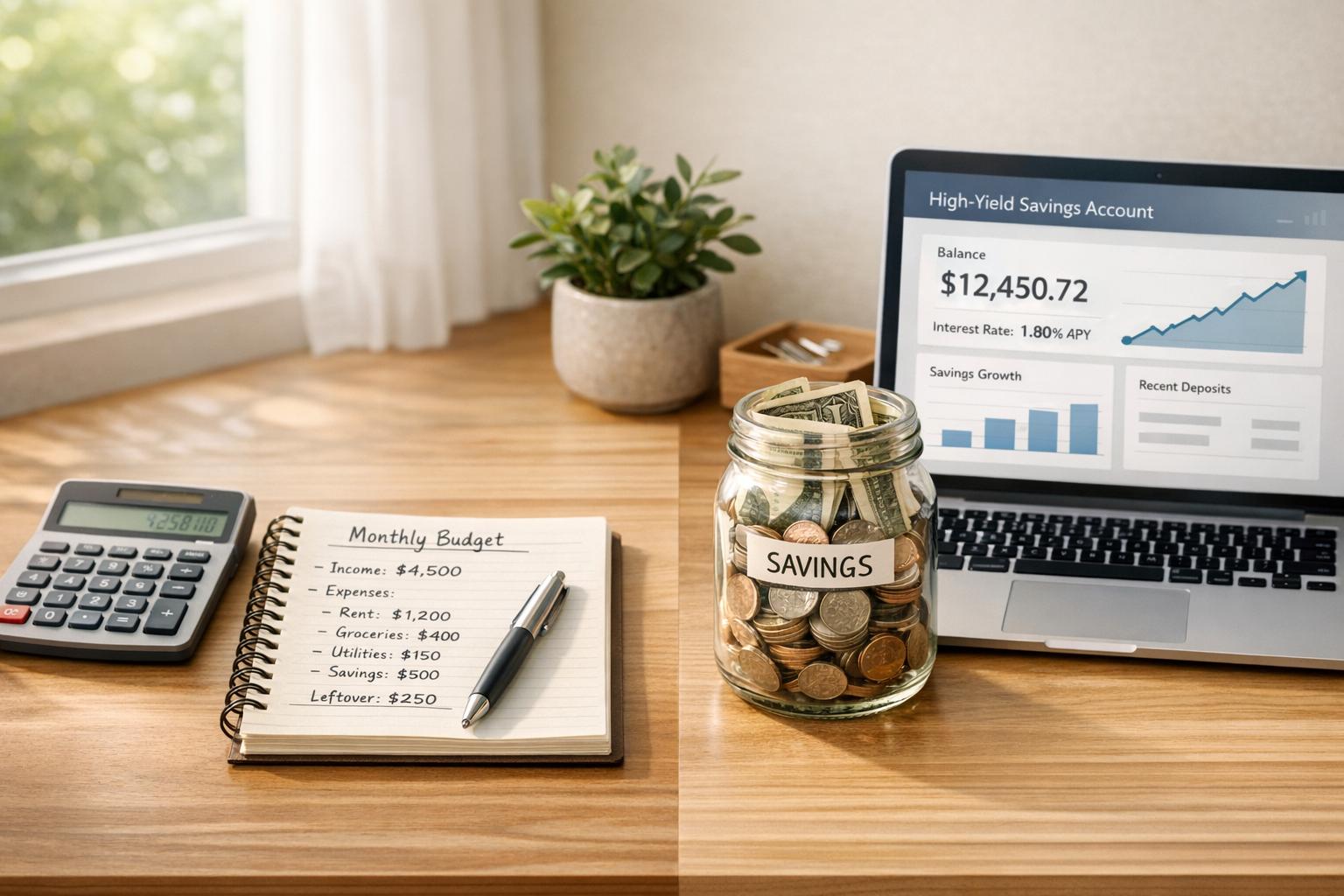
When it comes to managing your finances, the choice between budgeting and saving isn't an either-or decision - they work best together. Budgeting helps you understand your income, expenses, and spending habits, while a savings account provides financial security for emergencies or future goals. Here's the key takeaway:
- Start with a budget: A budget gives you a clear picture of your cash flow - what you earn, spend, and can save.
- Build a small emergency fund: Aim for at least $1,000 to cover unexpected costs before tackling other financial goals.
- Combine both strategies: Use your budget to prioritize savings while controlling spending.
If you're unsure where to begin, focus on creating a budget first. Once you know how much money is left over after covering essentials, start saving. Together, these steps create a strong financial foundation.
Understanding Budgeting: The Foundation of Financial Success
A budget is essentially a written plan that maps out how you’ll allocate your money each month based on your income and spending habits. Think of it as a guide that shows where every dollar will go.
The real strength of budgeting lies in its ability to reveal your spending patterns. For example, tracking your expenses for 30 days can uncover small, recurring costs that may be better redirected toward savings. A budget doesn’t just highlight these unnecessary expenses - it also gives you the tools to address them.
To make sense of your spending, divide your expenses into two categories: "needs" (like housing, utilities, groceries, and insurance) and "wants" (such as dining out, entertainment, or vacations). This approach helps prioritize essentials, like building an emergency fund.
Here’s a surprising fact: nearly 90% of Americans use a budget, but fewer than 25% stick to it consistently. Meanwhile, the average credit card debt per borrower hit $7,321 in the first quarter of 2025. A well-thought-out budget can act as a safeguard, creating boundaries to prevent overspending.
Perhaps most importantly, budgeting shifts savings from being an afterthought to a priority. Instead of hoping there’s money left over at the end of the month, a budget ensures savings are treated with the same importance as your rent or utility bills.
Why Budgeting Comes First
Before you can focus on saving, you need to know exactly how much money you have available. Without a clear understanding of your income and expenses, it’s tough to determine what can realistically be set aside for future goals.
Budgeting provides clarity and control by answering three key questions: How much money do I actually take home? Where is it going? And what’s left after covering the essentials? Once you know your surplus, you can direct it toward both short- and long-term financial goals. This clarity doesn’t just reduce financial stress - it also ensures you’re less likely to worry about running out of money before your next paycheck.
Financial educator Julie Beckham explains it perfectly:
Figuring out what your financial priorities are and recognizing that they might not align with what the world is telling you your priorities should be can really help.
Budgeting forces you to identify what truly matters. Whether it’s building an emergency fund, paying off debt, or saving for a big purchase, a budget helps you figure out where to cut back and where to focus.
How to Create a Budget
Creating a budget doesn’t have to be overwhelming. Start by calculating your net income - that’s the amount you actually take home after taxes and deductions. Using your gross salary can lead to unrealistic expectations, so it’s important to work with the actual amount deposited into your account.
Next, track every expense for at least 30 days. Use bank and credit card statements to record your spending, then organize it into two categories: fixed costs (like rent, car payments, or insurance) and variable costs (like groceries, gas, or entertainment). This exercise can uncover spending habits you might not have noticed, giving you a clear picture of where adjustments are needed.
Once you have a handle on your expenses, you can organize your spending using the 50/30/20 rule:
- 50% of your take-home pay goes to needs,
- 30% to wants,
- 20% to savings and debt repayment.
This framework ensures a balanced approach, allowing you to address essentials while still leaving room for enjoyment and financial growth.
Hillary Seiler, founder of Financial Footwork, offers some practical advice:
The moment you try to tackle your budget in one sitting, you're setting yourself up for failure… just do the reps like a training program.
In other words, don’t expect to get it perfect right away. Treat the first few months as a learning period. If you find yourself consistently overspending in one category, adjust your budget or explore cheaper alternatives to bring those costs down.
For those who want extra help, tools like Monefy can simplify the process. The app automatically tracks and categorizes your expenses in real-time, saving you the hassle of manually logging every purchase. It even lets you set spending limits and provides alerts to help you stay on track.
Lastly, automate your savings. Set up an automatic transfer to your savings account on payday - before you have a chance to spend the money. This "pay yourself first" strategy ensures your savings goals are met without relying on leftover funds. Now, let’s explore how these budgeting habits can strengthen your savings plan.
The Role of a Savings Account: Building a Safety Net
Once your budget reveals a surplus, a savings account becomes essential for securing your financial safety net. Its primary role? Shielding you from unexpected financial emergencies. Whether it's a surprise medical bill, car repair, or sudden job loss, having cash set aside can prevent you from relying on high-interest credit cards or loans, which often lead to long-term debt.
What makes a savings account so valuable is its liquidity - you can access your money quickly without penalties or worrying about market fluctuations. Unlike retirement accounts that may charge fees for early withdrawals or investments that can lose value, a savings account keeps your emergency fund stable and readily available. This peace of mind can ease the stress and decision-making paralysis that often accompany financial crises.
Think of it as your financial buffer. When life throws you a curveball - like a broken-down car or an unexpected layoff - your savings are there to catch you.
How Much Should You Save?
Experts recommend building an emergency fund to cover 3 to 6 months of essential living expenses. However, the exact amount depends on your personal situation:
| Personal Situation | Recommended Emergency Fund Size |
|---|---|
| Single with high job stability | 3 months of expenses |
| Married with children and a mortgage | 6 months of expenses |
| Supporting a family or irregular income | 9 months of expenses |
| Initial starter goal | $1,000 |
If saving 3–6 months of expenses feels daunting, start smaller. A $1,000 starter fund is a great initial milestone. This amount can handle many common financial shocks and help you build momentum toward larger goals. Treat your savings like an essential bill - aim to set aside about 20% of your monthly income. You can also accelerate your progress by directing any windfalls, like tax refunds, bonuses, or cash gifts, straight into your emergency fund.
High-Yield Savings Accounts: Why Accessibility Matters
Not all savings accounts are created equal. While the average bank savings account offered just 0.39% interest as of December 15, 2025, high-yield savings accounts offer far better returns. For instance, the Vanguard Cash Plus Account delivered a 3.35% APY as of January 14, 2026, and some high-yield accounts reached an impressive 4.57% APY by mid-2025.
The difference in interest earnings can be striking. A standard savings account with a $10,000 balance at 0.39% interest would generate just $39 annually. In contrast, a high-yield account earning 4.57% APY could bring in $457 - over ten times more.
Certified Financial Planner Ohan Kayikchyan emphasizes:
Many just keep enough in their savings account to waive the monthly service fee, while the goal should be to save more than that.
High-yield savings accounts combine competitive interest rates with easy access to your funds. Your money is FDIC-insured up to $250,000, offering security. Plus, you can typically access your funds the same day or the next business day, making these accounts ideal for holding your emergency fund. This way, your money grows while staying accessible for emergencies.
To maintain financial discipline, keep your emergency fund separate from your checking account. Automating transfers to your high-yield savings account each payday ensures consistency and helps you clearly separate your safety net from everyday spending. This simple habit can make a big difference in safeguarding your financial future.
Budgeting vs Savings: Weighing the Pros and Cons

Budgeting vs Savings Account Comparison: Benefits, Drawbacks, and Requirements
Budgeting and saving are two essential tools that work hand-in-hand to strengthen your financial health. While budgeting is all about creating a plan for how you’ll allocate your money, saving focuses on setting aside funds for future needs.
Budgeting puts you in the driver’s seat. It helps you track where your money is going and spot areas where you can cut back to boost your savings. That said, budgets that are too tight can feel suffocating and may lead to frustration or burnout.
Saving, on the other hand, provides a safety net. It cushions you from unexpected expenses and eases financial stress. However, saving too aggressively without understanding your cash flow could leave you short on funds for everyday expenses. Plus, if your savings sit in a low-interest account, their growth will be slow - especially when compared to other investment options.
Your financial strategy should depend on your current situation. If you’re unsure where your money is going or find yourself spending more than you earn, start with budgeting to get a clear picture. On the other hand, if you have extra income but no emergency fund, focus on saving to create a financial buffer. Ideally, you’ll want to tackle both at the same time - use a budget to carve out savings opportunities while building a small emergency fund, like $500, to avoid relying on credit cards when life throws you a curveball.
Here’s a quick breakdown of the pros and cons of each approach:
Comparison Table: Budgeting vs Savings
| Feature | Budgeting (The Plan) | Saving (The Safety Net) |
|---|---|---|
| Primary Benefit | Helps control spending and uncover extra funds | Shields against unexpected expenses and debt |
| Psychological Impact | Lowers stress by providing clarity and predictability | Eases anxiety by offering a financial cushion |
| Time Requirement | High: Needs consistent tracking and adjustments | Low: Can be automated with recurring transfers |
| Potential Drawback | May feel tedious or overly limiting | Opportunity costs if debt interest outweighs savings growth |
| Risk of Neglect | Without budgeting, savings goals may seem unattainable | A single emergency could wipe out progress |
sbb-itb-02fd20a
Using Monefy to Balance Budgeting and Savings
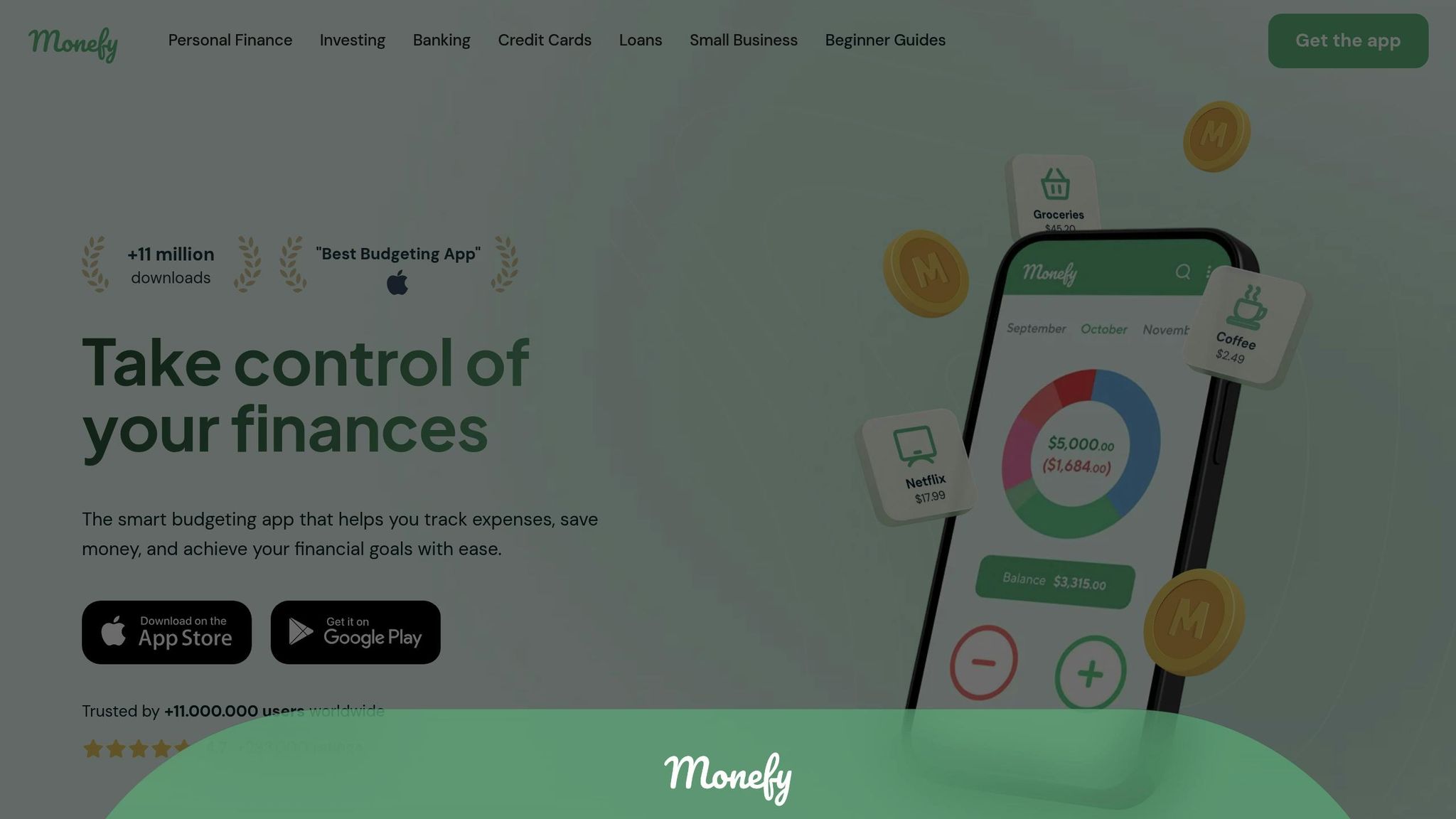
Combining budgeting and saving is a cornerstone of financial stability, and Monefy provides the tools to make this balance easier to achieve. By integrating a structured budget with a clear savings plan, Monefy streamlines both processes into one seamless experience.
One of the standout features of Monefy is its ability to track both your spending and savings progress in real time. For instance, the Transfer feature is particularly useful when building an emergency fund. Instead of logging transfers from checking to savings as expenses, you can categorize them as transfers. This keeps your budget accurate while highlighting smart financial moves. Additionally, Monefy allows you to manage multiple accounts - checking, savings, credit cards, and even cash - offering a complete snapshot of your net worth at any moment.
"The smart budgeting app that helps you track expenses, save money, and achieve your financial goals with ease." - Monefy
The app's visual design is another major advantage. Its intuitive circular charts let you see at a glance where your money is going. For example, if your spending on "wants" starts creeping up and cutting into your savings, you'll notice it right away. You can also create custom categories for specific savings goals, such as an Emergency Fund, a Vacation, or a Home Down Payment, making it easy to track your progress over time.
Monefy encourages active involvement in your finances by using manual data entry. Logging expenses as they happen ensures an accurate record of your spending. And with the quick-add feature, you can record transactions in under 10 seconds, keeping the process simple and efficient.
Automating Your Savings and Budgeting Workflow
While Monefy emphasizes hands-on tracking, it also provides automation tools to simplify your financial routine. For instance, recurring transactions allow you to automate regular income entries and fixed savings contributions. Setting up a recurring transfer for savings - like $50 per week - can help you build up to $2,600 in a year without constant effort.
To keep your data consistent, Monefy offers cloud sync, ensuring your records are up-to-date across all devices. And if you're offline, you can still log expenses without missing a beat.
For those who want a deeper dive into their finances, Monefy lets you export data to CSV or Excel. This feature is perfect for analyzing long-term spending trends and spotting areas for improvement. Instead of micromanaging your budget daily, try reviewing your Monefy balance weekly. This routine helps you stay on track and make adjustments before your spending affects your monthly savings goals.
Conclusion: Striking the Right Balance
There's no one-size-fits-all strategy here - your financial situation determines the best starting point. If you're spending more than you earn or feel like your finances are spiraling, budgeting should be your first move, as highlighted earlier. On the other hand, if your spending is under control but you're lacking a financial safety net, prioritizing an emergency fund can shield you from unexpected costs.
Budgeting and saving are like two sides of the same coin. A budget helps you track your spending and uncover ways to save, while savings ensure you can stick to your plan even when life throws you a curveball. Think of it this way: budgeting is your roadmap, and savings are the fuel - both are essential to reach your financial goals.
Your strategy might also depend on how consistent your income is. For those with steady paychecks, setting up automatic savings transfers on payday can make saving effortless. If you're living paycheck to paycheck, focusing on the timing of your cash flow - like syncing bill payments with your paydays - can help you spot small opportunities to save.
This balanced approach is made easier with tools that combine both strategies. For example, Monefy simplifies managing your finances by integrating budgeting and saving into one easy-to-use platform. Whether you're tracking daily expenses, automating savings, or working toward an emergency fund, the app keeps everything organized and within reach. Start small, and adjust as your financial situation evolves.
FAQs
Why is creating a budget more important than saving first?
Budgeting lays the groundwork for strong financial habits by giving you a clear picture of how much money is coming in, going out, and what’s left to save. Without a budget, it’s easy to lose track of spending or misjudge how much you can realistically put aside.
When you start with a budget, you can focus on covering essential expenses, spot areas where you can trim costs, and allocate a set amount for savings. This approach turns saving into a regular practice rather than an afterthought. It helps you stay aligned with your financial goals and prepares you for any unexpected expenses. A well-planned budget keeps saving consistent and manageable over time.
How can I balance budgeting and saving effectively?
To manage your money effectively, start by creating a realistic budget that accounts for your monthly income and expenses. Break your spending into categories like essentials (rent, utilities, groceries), discretionary items, debt payments, and savings. A good rule of thumb is to save 10–20% of your income. If you don’t have one yet, focus on building an emergency fund - aim for at least $1,000 to start, or ideally, enough to cover three to six months of essential expenses.
Once your budget is in place, make saving effortless by automating it. Set up regular transfers from your checking account to a savings account every payday. This ensures you’re consistently saving without the temptation to spend. Be sure to review your budget monthly, tweaking it as your financial situation changes. Any extra cash you free up - whether from cutting back on unnecessary expenses or finding additional income - can go toward increasing your savings or paying off debt. By treating budgeting and saving as a team effort, you’ll be setting yourself up for long-term financial security.
How can I start building an emergency fund effectively?
The smartest way to start building an emergency fund is to treat it as a must-have expense in your budget. Start by figuring out your essential monthly costs - things like rent or mortgage, utilities, groceries, and transportation - and set a savings goal that feels doable. While many experts suggest saving three to six months’ worth of living expenses, starting smaller, like aiming for $1,000, can be a practical first milestone.
Consider opening a separate high-yield savings account and setting up automatic transfers from your paycheck. This makes saving consistent and takes the hassle out of remembering to do it. Even modest amounts - say $50 or $100 per paycheck - can add up surprisingly fast. You can also look for ways to give your fund a boost, like trimming non-essential spending, using your tax refund, or directing extra cash from side gigs into savings. Just make sure the money is easy to access so you're ready when unexpected expenses pop up.