
High-yield savings accounts (HYSAs) and money market accounts (MMAs) are two popular options for storing emergency funds. Both are safe, FDIC-insured, and offer better interest rates than traditional savings accounts. Here’s the main difference: HYSAs typically provide higher interest rates (4-5% APY) and have low or no minimum balance requirements, while MMAs offer easier access to your money with debit cards and checks but often require higher balances.
Key Takeaways:
- High-Yield Savings Accounts: Best for growing savings with high interest rates. Requires transferring funds (1-3 days) for access.
- Money Market Accounts: Ideal for quick access via debit cards or checks but may charge fees for low balances.
Quick Comparison:
| Feature | High-Yield Savings Account | Money Market Account |
|---|---|---|
| Interest Rate (APY) | 4.00%-5.00%+ | 0.61%-4.10% |
| Access | Online transfers | Debit cards, checks, ATMs |
| Minimum Balance | Low or none | Higher (e.g., $100-$5,000) |
| Fees | Rare | Possible for low balances |
| Best For | Long-term savings growth | Immediate access needs |
For most, combining both accounts works well: keep a month’s expenses in an MMA for quick access and the rest in an HYSA for better growth.

High-Yield Savings vs Money Market Accounts Comparison Chart
What Are High-Yield Savings Accounts?
A high-yield savings account (HYSA) is a type of savings account that offers interest rates much higher than those of standard savings accounts. While traditional savings accounts typically provide an annual percentage yield (APY) of around 0.42% to 0.54%, HYSAs often boast rates between 4.00% and 5.25% or even more. That’s a significant difference - often 10 to 12 times higher than what you’d earn at a typical brick-and-mortar bank.
These accounts are primarily offered by online banks and credit unions. Since these institutions save money on overhead costs, they can pass those savings on to customers in the form of better interest rates. Opening an HYSA is usually simple, with many requiring little to no deposit - some start at just $0.01 to begin earning interest. Additionally, most competitive HYSAs don’t charge monthly maintenance fees. For instance, Newtek Bank offers a 4.35% APY with a minimum deposit of just $0.01 to start earning.
However, there are trade-offs. Unlike checking accounts, HYSAs typically don’t come with debit cards or check-writing capabilities. Many also limit certain types of withdrawals or transfers to six per statement cycle, though some institutions have relaxed these rules.
Another thing to keep in mind is that HYSA interest rates are variable, meaning they can change based on market conditions. While these rates usually stay well above those of traditional savings accounts, they’re not guaranteed to remain at the same level.
"The high-yield savings account is a deposit account that pays interest monthly but may be subject to a certain number of withdrawals per month. It's best used for emergency funds." – Sallie Mullins Thompson, CPA and Financial Planner
Let’s take a closer look at why HYSAs are so appealing.
Benefits of High-Yield Savings Accounts
The main draw of HYSAs is the potential for higher earnings. With interest rates reaching 4% to 5% or more, your money grows far faster than it would in a traditional savings account. For example, a $10,000 balance earning 4.50% APY generates $450 annually, compared to just $42 at a 0.42% rate - over $400 more in a year.
HYSAs are also easy to set up and maintain. Most accounts can be opened online, with no complicated requirements to earn the advertised rates. Top-tier HYSAs often charge no monthly fees and require minimal or no initial deposits.
Another big advantage is peace of mind. Deposits are federally insured up to $250,000 per depositor by the FDIC, which means your savings are protected even during economic downturns. Unlike investments in stocks or bonds, your HYSA balance won’t fluctuate with the market.
Drawbacks of High-Yield Savings Accounts
Despite their benefits, HYSAs have some limitations. Access to funds is more restricted compared to checking accounts. Withdrawal caps - often six transactions per cycle - can make them less convenient for frequent use. Additionally, most HYSAs don’t provide debit cards or checks, so spending directly from the account isn’t an option. Instead, you’ll need to transfer funds to a linked checking account first. That said, some accounts, like UFB Portfolio Savings, do offer ATM cards as an exception.
Since HYSAs are primarily managed online, you’ll need reliable internet access and a level of comfort with digital banking. There’s no option for in-person service at a branch.
Finally, variable interest rates mean your earnings can fluctuate. While rates might be high now, banks can lower them without notice. On top of that, any interest you earn is taxed as regular income. For instance, if you earn $450 in interest on a $10,000 balance with a 4.50% APY, you could owe around $166.50 in federal taxes if you’re in the highest tax bracket.
What Are Money Market Accounts?
Money market accounts (MMAs) are a blend of savings and checking account features, designed for those who want to earn competitive interest rates while keeping their money accessible. These accounts typically offer FDIC insurance up to $250,000 per depositor, ensuring your funds are protected. What makes MMAs stand out is their flexibility - debit cards, ATM access, and check-writing privileges allow you to use your money without waiting for transfers. For example, if you need to cover a large expense like property taxes, you can write a check directly from your MMA.
On average, MMAs offer interest rates around 0.61%, which is higher than the typical 0.42% to 0.54% rates of standard savings accounts. Some online banks, however, take it a step further, offering rates as high as 4.10% or more. For instance, Quontic Bank, as of early 2026, provides a money market account with a 4.10% APY and requires only a $100 minimum opening deposit.
That said, MMAs often come with higher minimum deposit requirements - sometimes hundreds or even thousands of dollars - to avoid monthly fees, which can range from $5 to $25. A few exceptions exist, like Ally Bank's Money Market Account, which has no minimum balance requirements and charges no monthly fees, but these are relatively rare.
"Money market accounts are best for parking cash that is needed in the short term - less than one year up to three years." – Sallie Mullins Thompson, CPA and Financial Planner
Benefits of Money Market Accounts
One of the biggest perks of an MMA is immediate access to your funds. With a debit card and checkbook, you can quickly access cash during emergencies, skipping the delays of transferring money between accounts.
"The ability to use a debit card is a major pro of money market accounts." – Bradley Thompson, Chartered Financial Analyst, New Canaan Group
MMAs also offer competitive interest rates that often outshine traditional savings accounts. For example, Sallie Mae's Money Market Account features a 3.65% APY, no monthly fees, and no minimum balance requirements - all while allowing check-writing capabilities. Plus, your deposits are safeguarded by FDIC insurance, covering up to $250,000 per person, per bank. Joint accounts can double this coverage to $500,000.
Drawbacks of Money Market Accounts
Despite their advantages, MMAs come with a few downsides. The most notable is their higher barrier to entry - many accounts require significant minimum deposits, and failing to maintain a required balance can result in monthly fees ranging from $5 to $25. Additionally, MMA interest rates are variable, meaning they can drop due to market changes or Federal Reserve decisions.
Another limitation is the federal withdrawal cap, which restricts certain types of withdrawals or transfers to six per month. Exceeding this limit may lead to excess withdrawal fees, reducing the account's overall flexibility.
Next, we’ll take a closer look at how these accounts compare side by side.
High-Yield Savings vs. Money Market Accounts: Side-by-Side Comparison
High-yield savings and money market accounts both come with FDIC insurance and competitive interest rates, but they differ in how you can access your money, fee structures, and balance requirements. High-yield savings accounts typically offer better APYs and require little to no balance, making them great for growing your savings. Money market accounts, on the other hand, provide added flexibility with check-writing and debit card access, though they often require higher balances. Let’s break it down to help you choose the right option for your emergency fund.
Feature Comparison Table
| Feature | High-Yield Savings Account | Money Market Account |
|---|---|---|
| Typical APY | Can reach 4.00%–5.00%+ with top-tier accounts | Generally lower (around 0.61%) but can match high-yield rates in select cases |
| Minimum Balance | Low or none | Higher, often starting at $100 or more |
| Access Methods | Online transfers and mobile apps | Checks, debit cards, ATM access, and transfers |
| Transfer Time | 1–3 business days to linked accounts | Immediate via check or debit card |
| Monthly Fees | Rare or non-existent | Possible if the balance falls below the required minimum |
| Withdrawal Limits | Typically 6 per month (varies by institution) | Typically 6 per month (varies by institution) |
| FDIC Insurance | Up to $250,000 per depositor | Up to $250,000 per depositor |
| Best For | Long-term savings growth | Short-term cash needs with quick access |
Pros and Cons at a Glance
Here’s a quick summary of the key differences:
High-yield savings accounts are perfect for building an emergency fund from scratch. Their higher APYs mean your money grows faster, and the low or no balance requirements make them accessible to nearly everyone. The only downside? Transfers can take 1–3 business days, which might not work in urgent situations.
Money market accounts shine when you already have a decent savings cushion and need more immediate access to your funds. With check-writing and debit card options, they’re convenient for expenses like property taxes or unexpected repairs. However, they often come with higher balance requirements, and falling below that threshold could lead to fees. Plus, their average interest rates tend to lag behind high-yield savings accounts.
"They're both very, very safe and offer liquidity." – Greg McBride, Chief Financial Analyst at Bankrate
It’s worth noting that the APYs for both account types can change based on Federal Reserve policies and market trends. What you earn today might not be the same tomorrow, so keeping an eye on rate adjustments is always a good idea.
sbb-itb-02fd20a
How to Choose the Right Account for Your Emergency Fund
Now that we've compared account types, let's look at how to align your emergency fund needs with the best option.
Choosing the right account comes down to three key factors: how quickly you need access to your funds, your ability to meet balance requirements, and the interest rate you're aiming for. Since both account types are FDIC insured, your focus should be on features that match your priorities.
When a High-Yield Savings Account Is the Better Choice
A high-yield savings account is a great fit if you're starting from scratch or want to grow your emergency fund with higher interest rates. These accounts are especially appealing because they often have little to no minimum balance requirements. For example, options like Marcus by Goldman Sachs and Varo allow you to open accounts with as little as $0 to $0.01, making them ideal for new savers.
The standout feature of high-yield savings accounts is their competitive interest rates. As of January 2026, many of these accounts offer annual percentage yields (APYs) ranging from 3.65% to 5.25%, helping your savings grow faster. However, keep in mind that accessing your money isn't instant - funds generally need to be transferred to a linked checking account, which might take a day or two. This slight delay can also help discourage impulsive withdrawals.
"The high-yield savings account... is best used for emergency funds." - Sallie Mullins Thompson, CPA and Financial Planner
If you're okay with the brief transfer wait, want to earn some of the best interest rates available, and prefer an account with minimal fees and balance requirements, a high-yield savings account could be your best bet. It's an excellent option for storing the majority of your emergency fund - typically three to six months of living expenses - while allowing your savings to grow steadily over time.
Now, let's look at when a money market account might be a better option.
When a Money Market Account Is a Better Fit
A money market account is ideal if you need quick, direct access to your emergency funds or already have a solid savings base. These accounts often come with check-writing and debit card privileges, making it easy to cover unexpected costs like car repairs or medical bills without waiting for a transfer.
"A safe bet would be one month of basic expenses in your money market for urgent and immediate needs, since they typically come up with debit cards. The rest can be transferred from your HYSA if needed." - Derilyn Freeman, CFP, Prudential
However, money market accounts usually come with higher minimum balance requirements, often ranging from $100 to $5,000. Falling below the required balance might result in monthly fees, which can quickly add up during emergencies. While some banks, like Ally Bank, offer accounts with no minimum balance, others, such as M.Y. Safra Bank, require $5,000 to avoid a $10 monthly fee.
A money market account could be the right choice if you can consistently meet the balance requirements, value instant access to your funds, and want an account that blends features of both checking and savings. Many people find a tiered approach works well - keeping about one month of essential expenses in a money market account for immediate needs, while storing the remaining three to five months in a high-yield savings account to take advantage of higher interest rates.
Using Monefy to Track Your Emergency Fund
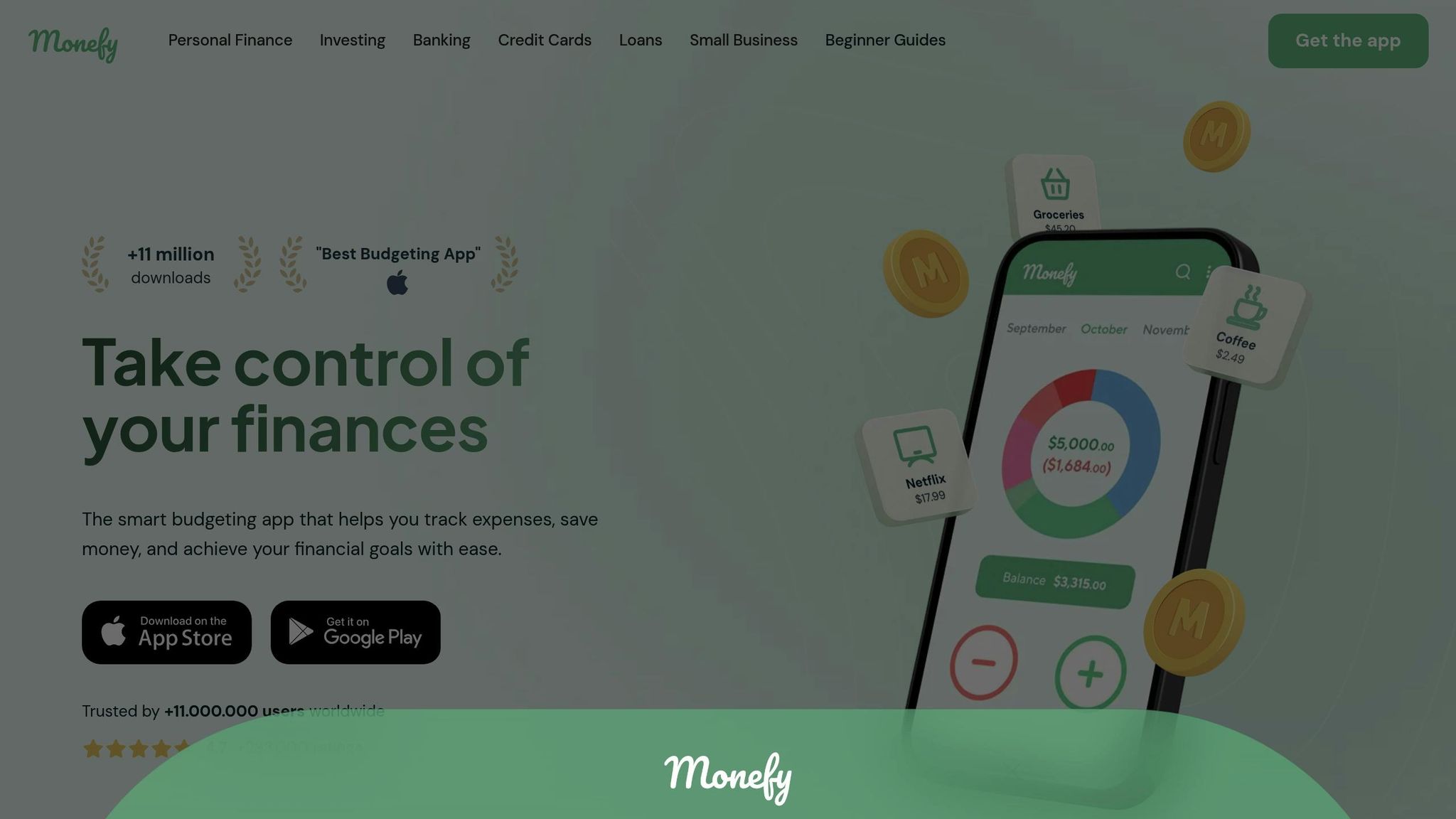
Once you've decided on the right account - whether it's a high-yield savings account or a money market account - keeping an eye on your progress is the next step. Monefy, a personal finance app, makes it easy to monitor your emergency fund, set clear savings goals, and track how close you are to reaching the recommended six months' worth of expenses.
Monefy allows you to create separate accounts for different financial goals. For example, you can set up categories like "Emergency Fund", "Savings", or "Cash", keeping your emergency savings clearly separated from your day-to-day spending. With its one-tap data entry, logging transfers is quick and hassle-free - whether you're moving $100 or $1,000 from your checking account.
The app also provides charts to track your earned interest over time, which is especially helpful since interest rates can vary. These visual tools let you see if your account is growing as expected, so you can tweak your strategy if needed.
Experts suggest maintaining six months' worth of expenses in a high-yield savings account. Monefy's goal-setting feature helps you work toward this target, offering detailed percentage breakdowns to show how much of your income is being funneled into your emergency fund.
Whether you're starting with a $1,000 safety cushion or aiming for a full six-month reserve, Monefy helps you stay organized and focused on reaching your financial goals.
Conclusion
When deciding between account options, it all comes down to balancing your immediate needs with the goal of growing your savings. The right choice depends on how you plan to use your emergency fund.
If earning interest with minimal effort is your priority, a high-yield savings account (HYSA) is a strong option. With rates climbing to 4%–5% or more, HYSAs allow your money to grow steadily without the headache of fees. However, keep in mind that accessing your funds involves transferring them to your checking account first, which may take some time.
On the other hand, money market accounts (MMAs) shine when instant access is key. The ability to write checks or use a debit card makes MMAs a practical choice for emergencies requiring immediate payments.
"The ability to use a debit card is a major pro of money market accounts" – Bradley Thompson, Chartered Financial Analyst, New Canaan Group
That said, MMAs often come with higher minimum balance requirements and monthly fees if your balance falls below the threshold.
For a well-rounded approach, consider combining the two: use an MMA for quick access to funds and an HYSA for long-term growth. This hybrid strategy offers both flexibility and the ability to earn interest, so you don’t have to compromise.
To keep your savings plan on track, tools like Monefy can help. With features like visual charts and goal-setting tools, Monefy makes it easy to monitor your emergency fund's growth, track interest earnings, and adjust your strategy as your financial situation evolves. Stay organized and confident as you work toward building a solid financial safety net.
FAQs
What’s the difference in interest rates between high-yield savings accounts and money market accounts?
High-yield savings accounts often come with interest rates that can go as high as 4.50% APY, whereas money market accounts tend to offer rates around 4.40% APY. These numbers, however, can shift depending on the financial institution and market conditions.
Both account types are solid choices for building an emergency fund. That said, it’s crucial to weigh factors like terms, fees, and minimum balance requirements to determine which option aligns best with your financial objectives.
What are the benefits of using both a high-yield savings account and a money market account?
Using a high-yield savings account alongside a money market account is a smart way to balance safety, accessibility, and earning potential for your savings. Both options are low-risk, making them ideal for building an emergency fund, as they offer steady returns and allow easy access to your money when you need it.
By pairing these accounts, you can create a more varied savings strategy. High-yield savings accounts often come with FDIC insurance, giving you peace of mind that your money is protected. Meanwhile, money market accounts might offer slightly better interest rates, particularly during times when rates are climbing. This combination helps you maximize your interest earnings while ensuring your savings remain secure.
Having both accounts also adds flexibility to your financial planning. You can allocate funds based on how quickly you might need access to them. For example, you could use a high-yield savings account for your primary emergency fund - money you might need at a moment’s notice. On the other hand, a money market account could hold funds you’re less likely to need immediately but still want to grow over time. This setup ensures you’re ready for unexpected costs without missing out on potential interest.
How do I decide between a high-yield savings account and a money market account?
When deciding between a high-yield savings account and a money market account, it’s important to think about your financial priorities and how you plan to use the funds. Access and flexibility play a big role here. Money market accounts often come with perks like check-writing capabilities and debit cards, making them a convenient choice if you need frequent access to your money. High-yield savings accounts, while offering fewer withdrawal options, usually provide competitive interest rates that can help grow your savings faster.
Another key factor is how much you can earn. High-yield savings accounts tend to offer consistently strong interest rates, while money market accounts might feature tiered rates that reward higher balances. Both options are FDIC insured, which means your deposits are protected up to $250,000 per depositor, per institution.
The decision ultimately comes down to your priorities. Do you need quick access to your cash, or is earning a higher return more important? Both accounts can serve as solid choices for an emergency fund, depending on your financial goals and preferences.