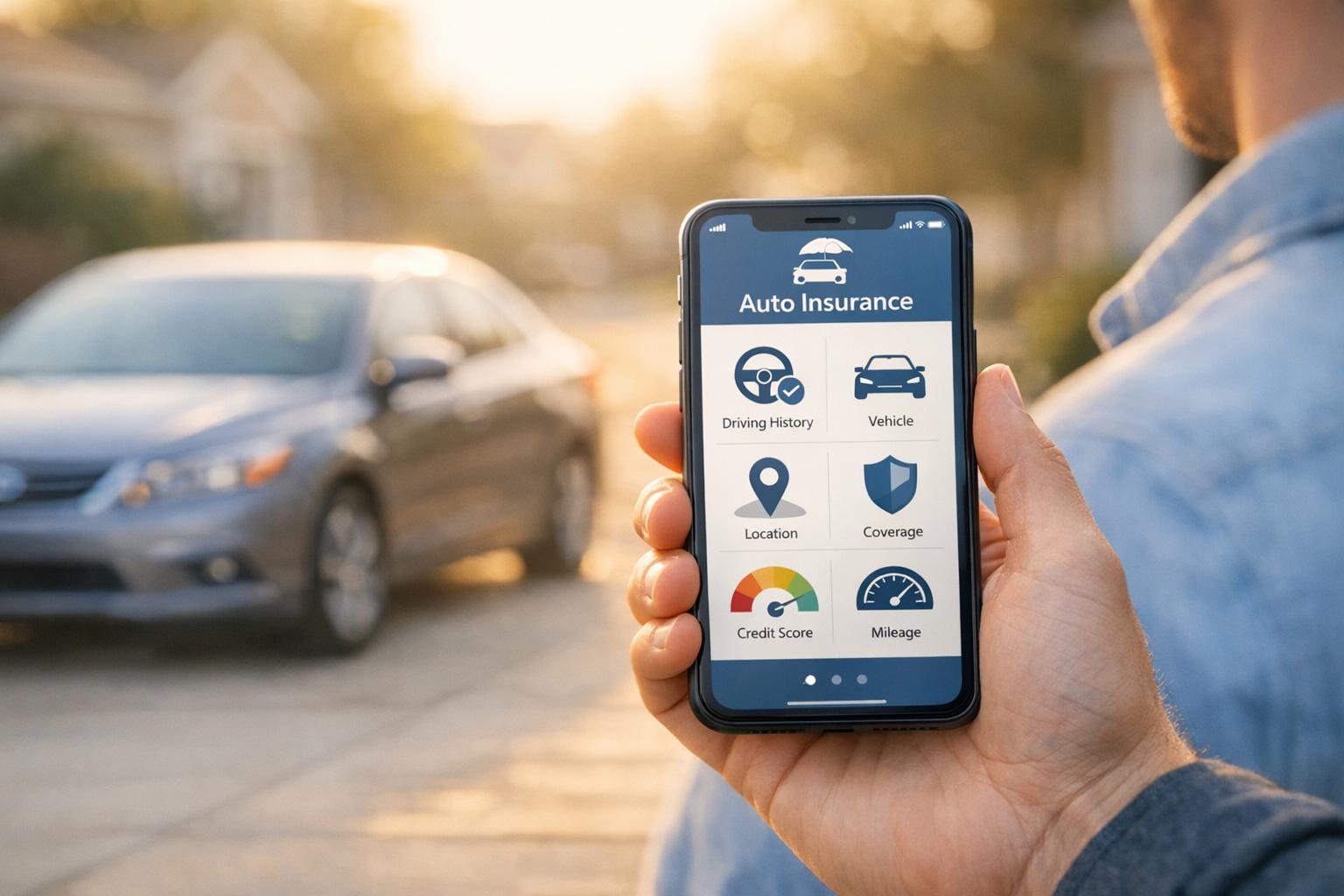
Auto insurance premiums vary widely based on factors like your driving history, age, location, vehicle type, and coverage choices. Insurers assess risk to determine how likely you are to file a claim and how expensive that claim might be. Here’s a quick breakdown of what impacts your costs and how you can save:
- Driving Record: Accidents or violations (e.g., DUIs, speeding) can significantly increase premiums.
- Age & Marital Status: Younger drivers pay more; married drivers often pay less.
- Location: Urban areas with higher crime or accident rates lead to higher premiums.
- Vehicle Type: Luxury, sports, or electric cars cost more to insure due to repair costs and theft risks.
- Coverage Choices: Higher coverage limits and add-ons (e.g., roadside assistance) increase premiums.
- Credit Score: In most states, poor credit can raise your premium significantly.
- Annual Mileage: Driving fewer miles can lower your costs.
How to Save:
- Shop around and compare quotes annually.
- Opt for a higher deductible to reduce monthly costs.
- Bundle policies (e.g., auto and home insurance) for discounts.
- Improve your credit score where applicable.
- Take a safe driving course or enroll in usage-based insurance programs.
Understanding these factors helps you make informed decisions to manage your insurance costs effectively.
Personal Factors That Affect Your Premium

How Traffic Violations Impact Auto Insurance Premiums: Annual Cost Increases
When setting your insurance premium, companies look at various personal details to estimate the likelihood of you filing a claim and how much it might cost. Knowing these factors can help you make smarter choices about your coverage.
Driving History and Behavior
Your driving record is a key factor in determining your insurance rates. Insurers usually examine the last three to five years of your driving history, though serious violations like a DUI in California can impact your rates for up to 10 years.
Traffic violations and accidents can lead to steep increases in premiums. For example, leaving the scene of an accident is the most expensive violation, doubling your premium with an average increase of $2,252 annually. A DUI conviction causes an average national rate hike of 98%, while in California, it can skyrocket premiums by as much as 310%. Even minor infractions like speeding 16–20 mph over the limit can add about $588 per year to your premium for three years, totaling more than $1,700.
Accidents also have a significant impact. At-fault accidents involving bodily injury can increase rates by 63%, while property damage claims over $2,000 push premiums up by 57%. Surprisingly, even not-at-fault accidents can lead to higher premiums in some states, as insurers may see any involvement in an accident as a risk indicator. Comprehensive claims, such as those for theft or vandalism, can also raise rates by about 18% for claims exceeding $2,000.
| Violation Type | Average Annual Premium Increase | Average Dollar Increase |
|---|---|---|
| Hit & Run | 100% | $2,252 |
| DUI | 98% | $2,214 |
| Racing | 93% | $2,094 |
| Reckless Driving | 87% | $1,955 |
| Speeding (16–20 MPH) | 26% | $588 |
| Texting While Driving | 17% | $393 |
Some insurers offer programs to ease the financial blow of accidents. For instance, accident forgiveness programs may prevent rate increases after a first minor incident (often under $500) or a first major accident after a period of loyalty, typically five years. Completing a defensive driving course can also help lower your premium or reduce points on your record. Since insurers weigh violations differently, shopping around after an incident can sometimes uncover better rates from companies that are less punitive about specific infractions.
Age, Gender, and Marital Status
Your age, gender, and marital status also play a role in shaping your insurance costs. Younger drivers aged 16–19 face higher premiums, averaging $2,670 for six months of coverage. In contrast, drivers in their 50s pay about $777 for the same period. This difference reflects the higher fatal-crash rate per mile for younger drivers compared to older ones.
Gender is another factor, with men often paying more due to riskier driving behaviors like speeding and driving under the influence. However, some states have prohibited insurers from using gender as a rating factor.
Marital status also matters. Married drivers generally pay 5% to 15% less than single drivers because they tend to file fewer claims.
As Mark Friedlander from the Insurance Information Institute explains:
"Auto insurers typically use more than a dozen rating factors to determine the cost of your insurance policy... Factors that are allowed in all states include your motor vehicle record, claim history, location (city/state) and the type of vehicle you drive."
By understanding how these demographic details affect your rates, you can better anticipate costs and take advantage of available discounts.
Where You Live
Your location is another critical factor in determining your premium. Insurers evaluate your ZIP code to assess risks like local crime rates, traffic patterns, weather hazards, and the costs of medical care and vehicle repairs.
The cost difference between locations can be staggering. North Carolina boasts the lowest average monthly premium for full coverage at $84, while Michigan leads with $280. Urban areas typically have higher premiums than rural ones due to increased traffic, more frequent accidents, and higher theft rates. For example, drivers in New York City pay an average of $460 per month, compared to just $59 in Asheville, North Carolina.
Justin Yoshizawa, Director of Product Management at Mercury Insurance, highlights this point:
"Insurers are focused on assessing risk when determining rates and certain ZIP codes pose a greater risk due to crime, accidents, population density, weather and average claims history."
Crime rates heavily influence comprehensive coverage costs. In 2023, California reported the highest number of motor vehicle thefts in the U.S., with 208,668 incidents. Additionally, areas with a high percentage of uninsured drivers - around 14% nationwide - tend to have higher premiums.
Weather risks also matter. Regions prone to hurricanes, floods, wildfires, or heavy snowstorms generally face higher premiums due to the increased likelihood of weather-related damage. Even where you park your car makes a difference - vehicles parked in secure garages are cheaper to insure than those left on the street, which are more vulnerable to theft or hit-and-run incidents.
State regulations further influence premiums. Each state sets its own minimum coverage rules and operates under either a no-fault or tort system. For example, no-fault states like Michigan often have higher premiums because of mandatory personal injury protection (PIP) and catastrophic claim fees. If you're planning to move, it’s a good idea to get quotes for your new ZIP code beforehand, as rates can vary significantly. For instance, relocating from San Francisco to San Diego could result in a 30% drop in your premium. Always update your garaging address with your insurer to avoid potential claim complications.
Vehicle Factors That Influence Premium Costs
After considering personal factors, the characteristics of your vehicle play a big role in determining your insurance premium. Specifics like the make, model, and repair costs of your car can significantly sway how much you pay.
Vehicle Make, Model, and Age
The type of car you drive directly impacts your insurance costs. Luxury cars, high-performance sports cars, and electric vehicles often come with higher premiums. Why? Their parts are pricier, and repairs often require specialized labor. Newer vehicles also cost more to insure due to their higher market value. As your car ages and its value drops - typically below $2,000 to $4,000 - you might consider dropping collision and comprehensive coverage.
The likelihood of theft also affects comprehensive coverage rates. Insurers keep a close eye on theft statistics. For instance, in 2019, full-size Ford pickups, Honda Civics, and full-size Chevrolet pickups were the most stolen vehicles, making them more expensive to insure. Electric vehicles add another layer of complexity, as replacing a damaged battery can cost thousands of dollars.
Justin Yoshizawa, Director of Product Management at Mercury Insurance, highlights:
"High-end sports cars, luxury cars and some electric vehicles (EVs) have higher premiums due to their parts costing more to repair or replace after an accident. An EV battery, for example, can cost thousands of dollars to replace if damaged."
Loretta Worters, Spokeswoman for the Insurance Information Institute, adds:
"Insurers not only look at how safe a particular vehicle is to drive and how well it protects occupants, but also how much potential damage it can inflict on another car."
Before buying a car, check its safety rating on the Insurance Institute for Highway Safety (IIHS) website. This can give you a clearer picture of how it might affect your premium. Comparing insurance quotes for different models while shopping for a car can reveal surprising differences - a safer, more common vehicle is usually cheaper to insure than luxury or sports models.
Safety Features and Anti-Theft Devices
Your car's safety features and anti-theft systems can also influence your premium by reducing risk. Features like automatic emergency braking, crash-avoidance systems, antilock brakes, and airbags lower the chance of accidents, which often leads to discounts. Anti-theft devices, such as GPS trackers, car alarms, and engine immobilizers, help prevent theft, making them especially valuable in areas with high theft rates. For example, California recorded 208,668 motor vehicle thefts in 2023.
While advanced safety features can lower accident risks, they can also increase repair costs due to their complexity. AAA notes:
"While cars with advanced safety and security features may cost more to fix, a mitigating factor is that those features... can also work to make a loss less likely and lower your rates."
When shopping for insurance, ask about discounts for features like GPS tracking, lane assist, blind-spot indicators, and passive restraints. If you add an aftermarket anti-theft or safety system, let your insurer know right away to see if you qualify for a discount. Cars with strong safety ratings, such as those evaluated by the IIHS, often come with lower insurance rates.
Repair and Replacement Costs
The cost of fixing or replacing your car is another key factor in your premium. Modern vehicles often include advanced components - like sensors, cameras, and high-strength materials - that make repairs more expensive. For example, a bumper replacement that once cost $800 can now exceed $2,000 due to integrated technology.
These advanced systems require skilled technicians, whose higher wages drive up repair costs. A shortage of qualified auto technicians has only added to the expense. As a result, vehicles may reach their total loss threshold sooner, meaning insurers are more likely to pay out the full actual cash value.
| Vehicle Type | Insurance Impact | Reason for Higher Cost |
|---|---|---|
| Electric Vehicles | High | Expensive battery replacement and specialized repairs |
| Sports/Luxury Cars | High | Specialized parts, high-end finishes, and higher theft rates |
| SUVs/Trucks | Medium-High | Larger size causes more damage; advanced sensors |
| Sedans/Minivans | Low-Medium | Standard parts, lower repair costs, and high safety ratings |
Family sedans and minivans tend to be more affordable to insure because they use standard parts and are associated with safer driving habits. On the other hand, sports cars often require high-performance parts that are expensive to replace. Researching safety ratings and average repair costs for a vehicle before buying can help you understand potential insurance expenses.
If you own a car with high repair costs, raising your deductible can lower your monthly premium. Just make sure you have enough savings to cover the deductible if needed. By understanding how repair costs affect premiums, you can make smarter choices about your coverage.
Policy and Coverage Factors
State-mandated liability coverage is typically the most budget-friendly legal option. On the other hand, full coverage - which includes liability, collision, and comprehensive insurance - comes with a higher price tag because insurers take on greater financial risk for repairs or replacements. Adding more coverage layers naturally increases your premium due to the insurer's increased liability.
Collision coverage covers damage to your vehicle from crashes involving other cars or objects. Meanwhile, comprehensive coverage addresses non-collision incidents like theft, vandalism, fire, and weather-related damage.
For a 40-year-old driver, the average cost of liability-only coverage is about $97 per month, while full coverage costs jump to $232 per month. For an 18-year-old, the gap is even wider: $297 monthly for liability-only versus $676 for full coverage. Your coverage limits also play a significant role. Opting for higher liability limits - like $50,000 for property damage instead of $5,000 - will increase your premium because the insurer takes on a greater potential payout.
"Auto insurers typically use more than a dozen rating factors to determine the cost of your insurance policy... Factors that are allowed in all states include your motor vehicle record, claim history, location (city/state) and the type of vehicle you drive, as well as the coverage levels and deductibles you choose."
Optional add-ons, such as uninsured motorist coverage, rental car reimbursement, and roadside assistance, can also increase your premium. However, if you already have roadside assistance through another service, removing it from your insurance plan could save you money. These factors set the stage for a deeper dive into how coverage options, limits, and deductibles impact your monthly bill.
Coverage Levels and Types
The types of coverage you choose significantly shape your premium. Liability insurance is the most affordable option, covering damage you cause to others but not your own vehicle repairs. Adding collision and comprehensive coverage protects your car but increases your premium.
"A policy that only has the legally required liability coverages will cost less than a policy that also has collision and comprehensive coverage."
The amount of coverage also matters. For instance, a 50/100/50 policy (covering $50,000 per person for bodily injury, $100,000 per accident, and $50,000 for property damage) costs more than a 25/50/25 policy.
"Higher coverage levels and lower deductibles mean more costs for the insurance company but lower out-of-pocket costs if your vehicle is damaged."
If you're financing or leasing your car, the lender will likely require collision and comprehensive coverage to safeguard their investment. However, once you own the vehicle outright and its value drops below $2,000 to $4,000, it may make sense to reconsider whether keeping these coverages is worth the cost.
How Deductibles Affect Your Premium
Your deductible - the amount you pay out of pocket before your insurance kicks in - directly impacts your premium. Deductibles for collision and comprehensive coverage usually range from $0 to $2,500. The relationship is straightforward: higher deductibles mean lower premiums, while lower deductibles result in higher premiums.
Raising your deductible from $500 to $1,000 can cut your annual premium by 20% to 25% on average. However, it's essential to ensure you can afford the deductible if you need to file a claim.
"Lower deductibles mean you pay less out of pocket in the event of a covered loss, but they come with higher premiums. Likewise, higher deductibles lower your rates, but you'll pay more in the event of a covered loss."
For minor repairs - like a $600 repair with a $500 deductible - it might be more economical to pay out of pocket rather than filing a claim, which could increase your premium. If you're financing your car, check with your lender, as many require a deductible of $500 or $1,000 to protect their asset. Next, let’s explore how bundling and discounts can further reduce your insurance costs.
Discounts and Bundling Options
Beyond coverage choices, discounts and bundling strategies can help lower your premium. Many insurers offer discounts for bundling multiple policies, such as auto and homeowners or renters insurance, under the same provider. Bundling can reduce your costs by up to 40%, depending on your insurer and location.
In January 2026, NerdWallet highlighted that American Family offers the largest bundling discount, up to 40% for eligible customers. State Farm provides a bundling discount that can save customers as much as $1,356 annually when combining home and auto policies. Multi-car discounts are another cost-saving option, applying when insuring more than one vehicle on the same policy - even if the vehicles belong to different family members living at the same address.
| Company | Bundle Discount (Home + Auto) |
|---|---|
| American Family | Up to 40% |
| Amica | Up to 30% |
| Country Financial | Up to 30% |
| Erie | 15% to 25% |
| State Farm | Up to $1,356 per year |
| USAA | Up to 10% |
Additional discounts include pay-in-full (paying your premium upfront), auto-pay (setting up recurring payments), and paperless billing (opting for electronic documents). Completing a state-approved defensive driving course could reduce your premium by 5% to 10%, saving you roughly $50 to $150 annually. Low-mileage or usage-based insurance programs can also offer savings of 10% to 30%.
While bundling is often cost-effective, it’s worth comparing the total cost of bundled policies to separate policies from different providers. In some cases, separate policies might save you more. Additionally, reviewing your policy annually and removing drivers who no longer live in your household can help avoid unnecessary costs.
sbb-itb-02fd20a
External and Behavioral Factors
The type of coverage you select and the car you drive are just part of the equation when it comes to determining your insurance premium. External circumstances and daily habits also play a big role. Insurers take into account how you use your car, your financial background, and the specific risks tied to your neighborhood. Let’s dive into how factors like mileage, credit score, and regional risks impact your rates.
Annual Mileage and How You Use Your Car
The more miles you drive each year, the higher your likelihood of being in an accident - and that means higher premiums. The average American drives about 13,476 miles annually. If you’re logging 15,000 miles or more, insurers will likely classify you as a high-mileage driver, which often leads to increased rates. On the flip side, if you drive less than 8,000–10,000 miles a year, you may qualify for low-mileage discounts.
How you use your car also matters. Insurers categorize usage into three main types: pleasure, commute, and business. Commuters often pay more because they’re on the road during high-traffic times, increasing the risk of accidents. Business use tends to carry the highest rates since it typically involves more time on the road and greater exposure to potential risks.
"The more time you spend on the road, the more likely you are to be involved in an accident - and the more likely your insurance company will have to pay!" - Ramsey Solutions
If your driving habits change - like switching to remote work or moving closer to your job - let your insurer know. These updates could reduce your premium. To get an accurate estimate of your annual mileage, tools like Google Maps can help you calculate your weekly commute, which you can then multiply by 52. For infrequent drivers, pay-per-mile insurance might be worth considering. This type of plan combines a base rate with a small charge for each mile driven.
Credit Score and Financial History
In most states, your credit score plays a key role in setting your auto insurance premium. Insurers use a credit-based insurance score, which is different from the credit score lenders use, to predict how likely you are to file claims and how expensive those claims might be. Data shows that people with lower credit scores are statistically more likely to file claims, which is why they often face higher premiums.
For example, poor credit can increase your annual premium by an average of $1,546. In extreme cases, drivers with very poor credit may see rates that are 117% higher than those with good credit. Some insurers might even require policyholders with poor credit to pay the entire six- or 12-month premium upfront before coverage begins.
"Historical data suggests that your credit history can help predict the likelihood that you'll file an insurance claim - Federal Trade Commission studies have revealed that those with less-than-perfect credit are more likely to file auto insurance claims than those with good credit." - Credit Karma
However, not all states allow insurers to use credit scores in rate calculations. California, Hawaii, Massachusetts, and Michigan prohibit this practice. If you live in a state where credit scores do affect rates, improving your credit can help lower your premium over time. Simple steps like paying bills on time, reducing high-interest debt, and addressing delinquent accounts can make a big difference. Budgeting tools like Monefy can help you stay on track and build the financial stability that insurers reward with lower rates.
Regional and Weather-Related Factors
Where you live has a major impact on your insurance premium. Insurers analyze your ZIP code to assess risks like population density, traffic patterns, crime rates, and even weather-related hazards. Urban areas with heavy traffic tend to have higher premiums due to the increased frequency of accidents, while rural areas often benefit from fewer collisions and lower population density.
Crime rates in your area also influence your premium. Neighborhoods with high rates of car theft, vandalism, or staged accidents typically see higher insurance costs.
Weather risks are another factor. Living in areas prone to hurricanes, floods, hail, or tornadoes can drive up your rates because of the greater likelihood of comprehensive claims. For instance, the national average car insurance premium in 2024 was about $1,759. But location matters - a driver in Vermont’s cheapest ZIP code might pay $1,370 annually, while someone in New York’s priciest ZIP code could face premiums as high as $13,620.
"Insurers are focused on assessing risk when determining rates and certain ZIP codes pose a greater risk due to crime, accidents, population density, weather and average claims history." - Justin Yoshizawa, Director of Product Management, Mercury Insurance
Before relocating, it’s smart to research average insurance rates in your potential new area. Even a small change in ZIP code can significantly affect your premium. If you already live in a high-cost area, consider steps like improving your parking situation or reporting hazardous road conditions to local authorities. These actions might help mitigate some of the regional risks that impact your rates.
How to Lower Your Auto Insurance Premium
Looking to cut down on your auto insurance costs? With a few thoughtful strategies, you can reduce what you pay without sacrificing the coverage you need.
Compare Rates from Different Insurers
Shopping around can make a big difference in what you pay for auto insurance. Insurers use different methods to assess risk, which means rates can vary significantly from one company to another. In fact, drivers who switched insurers in 2024 saved a median of $461 annually. Considering that average monthly premiums reached $195 by January 2026, even small savings can add up over the course of a year.
Make it a habit to compare quotes annually, especially when it’s time to renew your policy. Online tools and marketplaces make it easy to check prices across multiple insurers for the same coverage. Even if you haven’t filed a claim, your rates can still change due to market trends or regional risk adjustments.
Keep Your Driving Record Spotless
A clean driving record not only keeps you safe but also keeps your insurance costs down. Most insurers review your driving history from the past three to five years when determining your premium. Steering clear of speeding tickets, reckless driving, and DUIs ensures you remain in a low-risk category.
If you’re a cautious driver, consider signing up for a usage-based insurance (UBI) program. These programs use telematics to monitor your driving habits and reward safe behavior. In 2024, drivers enrolled in these programs saved a median of $120 annually.
Another way to save is by completing a defensive driving course. In some states, like New York, finishing a state-approved accident prevention course can earn you a 10% discount on your premium.
"Factors that are allowed in all states include your motor vehicle record, claim history, location (city/state) and the type of vehicle you drive, as well as the coverage levels and deductibles you choose." - Mark Friedlander, Insurance Information Institute
You might also want to pay out of pocket for minor damages. For example, if repairs cost $600 and your deductible is $500, avoiding a claim could help you sidestep potential rate increases.
Budget Smarter with Tools Like Monefy

Beyond traditional cost-cutting methods, effective budgeting can help you manage your auto insurance expenses. Tools like Monefy make it easy to track your spending and find areas where you can save.
Paying your premium in full is one way to save. Drivers who pay six-month or annual premiums upfront enjoy an average discount of 9%, which could mean around $230 in savings on full coverage each year. With Monefy, you can create a dedicated "Auto Insurance" category to set aside funds each month, making it easier to pay upfront when your premium is due.
"If you want the [paid-in-full] discount, consider saving a monthly amount to pay your next premium in full." - CarInsurance.com
Raising your deductible is another option to lower your premium. For instance, increasing your deductible from $250 to $500 could save you about $282 annually. Monefy can help you track your emergency savings, ensuring you have enough set aside to cover unexpected costs if an accident occurs.
With features like customizable reminders, Monefy also helps you avoid late fees by alerting you to upcoming payment deadlines. Trusted by over 11 million users worldwide and boasting a 4.7/5 star rating from more than 283,000 reviews, Monefy is a powerful tool for managing your finances.
Conclusion
Understanding Premium Factors
Auto insurance premiums are shaped by a mix of personal, vehicle-related, and external factors. Insurers assess details like your age, driving history, and where you live. For example, younger drivers often face higher rates due to increased accident risks. Vehicle specifics also come into play - while safety features might earn discounts, high-tech components can make repairs pricier.
Your policy choices directly impact your costs. Opting for a higher deductible, such as increasing it from $500 to $1,000, could lower your premium by 20% to 25%. However, this means paying more out-of-pocket if you file a claim. Additionally, factors outside your control, like local crime rates, weather conditions, and state regulations, can influence your rates.
"Auto insurers typically use more than a dozen rating factors to determine the cost of your insurance policy. Some common factors are prohibited in certain states, such as credit history, gender and ZIP code."
By understanding these variables, you can make smarter decisions to reduce your premium.
Steps to Lower Your Insurance Costs
To start saving, compare quotes from at least three insurers every year. In 2024, drivers who switched saved a median of $461 annually. Keeping a clean driving record is key, as even one speeding ticket can raise premiums by 37%. Enrolling in safe-driving programs might also qualify you for additional discounts.
Consider bundling your auto policy with homeowners or renters insurance for extra savings - this could save you about $382 per year. Review your coverage regularly; if your car’s value has dropped significantly, you might want to scale back on collision and comprehensive coverage. In states where it's allowed, improving your credit score can also help lower your rates.
To stay on top of payments and avoid unnecessary fees, use budgeting tools like Monefy. With features like expense tracking and customizable reminders, tools like this can simplify your financial planning and help ensure you never miss a payment.
FAQs
How does my credit score impact the cost of my auto insurance?
Your credit score has a big impact on what you’ll pay for auto insurance. Insurers often see a high credit score as a sign that you’re financially responsible, which they link to being a lower risk. This usually means drivers with better credit scores get lower premiums. On the other hand, if your credit score is on the lower side, you might face higher rates because insurers may associate it with a higher chance of missed payments or filing claims.
Want to lower your insurance costs? Work on boosting your credit score. Simple steps like paying bills on time, cutting down debt, and checking your credit report for mistakes can go a long way. Even small changes can add up over time!
What are the most effective ways to lower my auto insurance premium?
Lowering your auto insurance premium often starts with keeping a clean driving record. Accidents and tickets can cause your rates to spike, so safe driving pays off in more ways than one. Another way to cut costs is by choosing a higher deductible - say, $500 instead of $250. While this reduces your monthly premium, it does mean you'll pay more out-of-pocket if you file a claim.
You can also save by shopping around for quotes every so often. Insurance rates vary between providers, so comparing options could uncover a better deal. Bundling your auto insurance with other policies, like homeowners or renters insurance, is another way to score discounts. Don’t forget to inform your insurer of life changes, such as moving to a neighborhood with lower crime rates or tying the knot, as these can also impact your premium.
Finally, improving your credit score or opting for a vehicle that's safer and less costly to insure can make a difference. By taking steps to manage your driving habits, policy choices, and personal details, you can take charge of your auto insurance expenses and enjoy noticeable savings.
How does the type of vehicle affect auto insurance premiums?
The kind of car you drive has a big impact on your auto insurance rates. Insurers look at things like safety ratings, repair costs, and how often certain makes and models are involved in claims. For example, luxury cars or high-performance vehicles, which often have lower safety ratings or expensive repair needs, usually come with higher premiums. On the flip side, cars equipped with advanced safety features and lower repair costs tend to qualify for more affordable rates.
Another factor is how often a vehicle is involved in accidents or theft. Cars that are frequently targeted or have a history of more claims may lead to higher insurance costs. If you're aiming to lower your premiums, consider choosing a vehicle with a solid safety record and lower repair expenses. These details help insurers determine risk and set your rate.