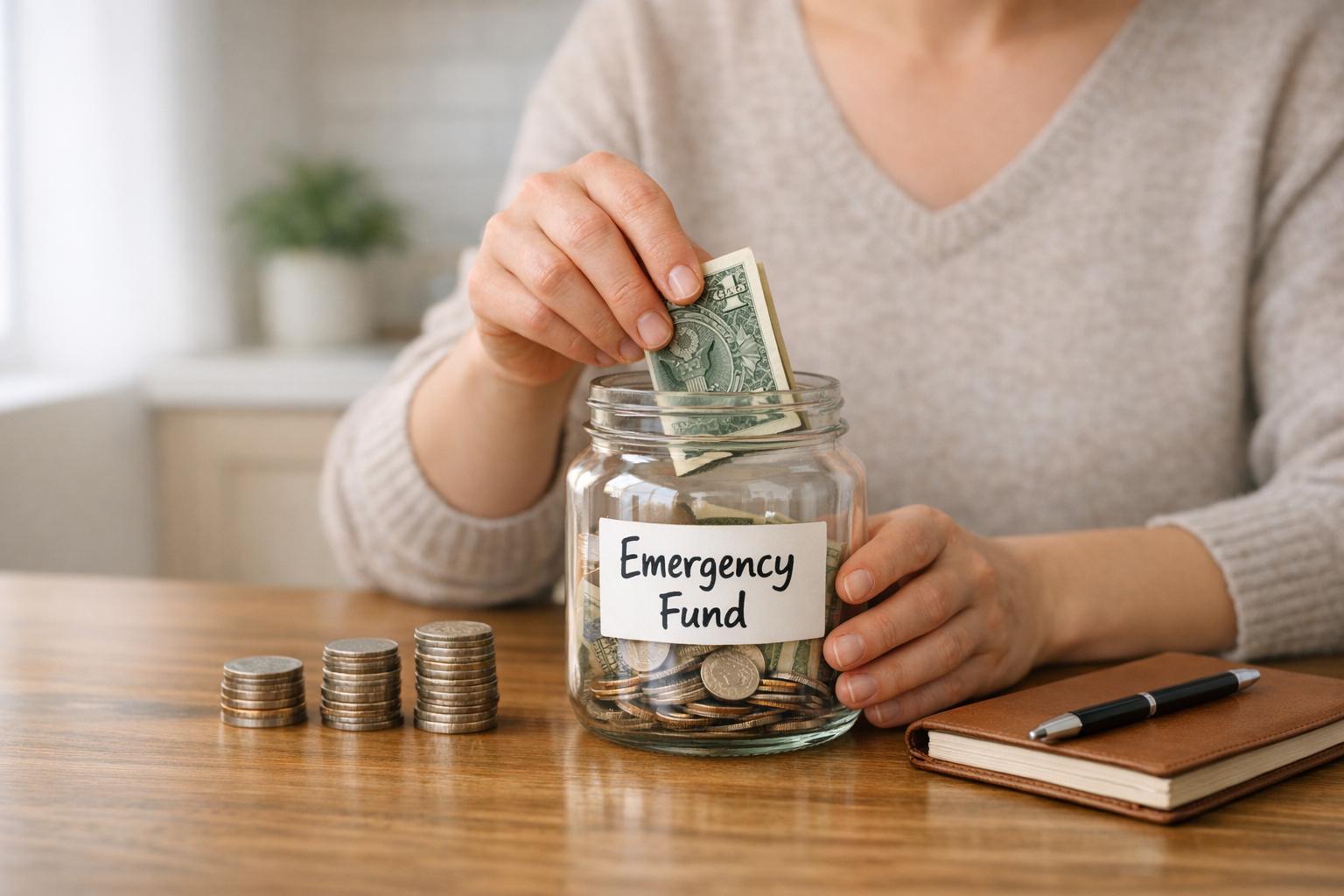
Life is unpredictable, and unplanned expenses can hit when you least expect them. Without a financial cushion, even a $400 bill can lead to debt or financial stress. Here’s why having an emergency fund is crucial:
- Unexpected Expenses Are Common: Medical bills, car repairs, home fixes, or job loss can happen to anyone. For example, 60% of Americans faced an unexpected expense last year.
- Debt Can Spiral Quickly: Without savings, many rely on high-interest credit cards, with rates averaging 22%, or take loans, which can worsen financial strain.
- Financial Anxiety Is Widespread: 70% of people report money-related stress, and 59% can’t handle a $1,000 emergency without borrowing.
- Emergency Funds Provide Stability: Saving 3–6 months of essential expenses protects you from dipping into retirement accounts, selling assets, or making desperate financial decisions.
Start small - aim for $1,000 as a "starter" fund. Track your spending, cut non-essential expenses, and automate savings into a high-yield account. Building this safety net gives you peace of mind and keeps your financial goals on track.

Emergency Fund Statistics: Why Americans Need Financial Safety Nets
Common Financial Emergencies People Face
Types of Financial Emergencies
Financial emergencies happen more often than you'd think - about 60% of Americans dealt with an unexpected expense in the past year.
Medical bills are the most common reason people dip into their emergency savings. Nearly 29% of those with savings use them for medical expenses. In total, 100 million Americans owe $220 billion in medical debt. Even with insurance, an emergency room visit can cost around $1,400, and without insurance, that number jumps to about $2,700. To make matters worse, nearly half of American adults can't afford an unexpected $500 medical bill out of pocket.
Car repairs are another frequent financial hurdle. A broken-down vehicle not only brings repair costs but can also affect your ability to get to work. Major repairs typically cost anywhere from $500 to $3,000.
Job loss is perhaps the hardest financial hit. The median length of unemployment in the U.S. is about 21.7 weeks - that’s more than five months without a paycheck. Meanwhile, bills like rent, utilities, and groceries don’t stop.
Home repairs can also wreak havoc on a budget. Urgent issues like a broken furnace, a leaking roof, or a failed water heater usually cost between $500 and $3,500. These are expenses that can’t be postponed and need immediate attention.
Then there’s inflation, which has forced many Americans to use their emergency funds just to cover everyday expenses. Rising costs have depleted savings for 54% of Americans, with prices climbing 26% since 2019. Essentials like rent, utilities, and groceries are now draining emergency funds for many.
"Inflation, and the resulting affordability challenges, clearly rules the roost when it comes to hampering the ability to save more money."
– Mark Hamrick, Senior Economic Analyst, Bankrate
Financial struggles also differ across demographics. For instance, 83% of hourly workers in the U.S. have less than $500 in savings, and 49% of women lack an emergency fund compared to 36% of men. Adding to the challenge, the median emergency fund balance dropped by half between 2025 and 2026.
What Happens Without an Emergency Fund
Without an emergency fund, the fallout from unexpected expenses can be severe. Nearly 59% of Americans can’t handle a $1,000 emergency without going into debt, and 37% can’t even cover a $400 expense using cash or savings.
Many turn to high-interest credit cards to bridge the gap, with average APRs hovering around 21.5%. This reliance can snowball into significant interest payments and long-term debt. In fact, 29% of Americans now carry more credit card debt than they have in emergency savings.
The stress of financial instability is also overwhelming. About 70% of Americans report feeling financial anxiety, which can cloud judgment and disrupt long-term planning.
"Not all surprises are good, and people know it. The study suggests financial precarity at a time when household finances may be stretched due to rising prices and inflation."
– Rebecca Rickert, Head of Communications, Empower
Without savings, people often resort to desperate measures. This might include borrowing from family, taking out payday loans with predatory rates, or selling personal belongings at a loss. Some even liquidate investments during market downturns, turning temporary losses into permanent setbacks. A lack of savings can also trap individuals in jobs they dislike, as they’re constantly one emergency away from financial disaster.
All of this underscores the importance of having an emergency fund. It’s not just about covering costs - it’s about maintaining control over your financial future.
sbb-itb-02fd20a
Why You Need an Emergency Fund
Financial Security and Peace of Mind
An emergency fund gives you a safety net that eases the stress of unexpected challenges. With money set aside, you can focus on your priorities instead of constantly worrying about what might go wrong.
According to research from Vanguard, having at least $2,000 in emergency savings is linked to a 21% boost in reported financial well-being. Taking it a step further - saving three to six months' worth of expenses - adds another 13% increase in financial comfort. These numbers highlight how much peace of mind comes from knowing you're prepared for the unexpected.
Without a financial cushion, people often spend twice as much time dealing with money problems, leaving less energy to focus on long-term goals. Having an emergency fund frees up that mental space, allowing you to concentrate on your career, family, and future without constant financial stress.
Staying Out of Debt During Emergencies
When emergencies hit and there's no cash on hand, many people rely on credit cards. With average interest rates around 22%, even a $2,000 expense - like an emergency room visit - can quickly spiral into a much larger debt. An emergency fund helps you avoid this trap by letting you cover unexpected costs upfront, without interest, penalties, or damage to your credit score.
It also protects your future savings. Without an emergency fund, you might have to dip into retirement accounts, which could mean steep taxes and early withdrawal penalties, sometimes taking away 30% or more of your savings. Worse, you could be forced to sell valuable assets at a loss just to make ends meet.
"The emergency fund is the financial equivalent of a smoke detector - you hope it never activates, but the cost of not having one can be catastrophic."
– Household Finance Authority
Even with insurance, emergencies often require cash on hand to cover deductibles, which can range from $1,500 to $7,500. The numbers tell the story: 51% of investors without emergency savings reported higher financial stress in the past year, compared to just 15% of those with savings. Having that financial buffer not only keeps you out of debt but also shields you from the ripple effects of financial strain.
Up next: Learn actionable steps to start building your emergency fund.
How to Build an Emergency Fund
Determine How Much to Save
Experts often recommend saving enough to cover three to six months of essential living expenses, but your target should reflect your unique circumstances. For instance, freelancers or self-employed individuals might aim for nine to twelve months of savings to handle income fluctuations. On the other hand, dual-income households with steady jobs could start with a smaller reserve, such as two to three months. When calculating your goal, focus on essential expenses like rent or mortgage, utilities, basic groceries, insurance, minimum debt payments, transportation, and childcare. Skip non-essentials like dining out, gym memberships, or streaming services.
Here's an example: if your essential expenses total $3,000 per month, a six-month reserve would amount to $18,000. To make this goal less daunting, start small. Build a $1,000 "starter" fund first - enough to handle minor emergencies like car repairs or a dental visit - before working toward the full amount.
Once you’ve set your target, look at your current spending to figure out where you can free up extra cash.
Track Your Spending to Find Extra Money
The first step is to track every dollar. Conduct a 30-day review of all your income and expenses. You can use a budgeting app like Monefy to automatically categorize your spending or go old-school with a simple spreadsheet or notebook. Break your expenses into two categories: "needs" and "wants". This will help you identify areas to cut back. For example, the average U.S. household spends over $200 a month on subscriptions - are there any you could cancel?
Go through your bank statements to spot recurring charges you might eliminate. You can also call service providers - like your internet or phone company - to negotiate better rates. Small adjustments add up over time. For example, redirecting just $50 a week into savings could grow to about $2,600 in a year.
If you receive a raise, consider saving at least half of the additional income. Similarly, any unexpected windfalls - like a tax refund, bonus, or cash gift - can go straight into your emergency fund to help you reach your goal faster.
Set Up Automatic Savings Transfers
Once you’ve identified some extra funds, make saving a habit by automating it. Set up a recurring transfer from your checking account to a high-yield savings account (HYSA) right after payday. This way, the money is moved before you have a chance to spend it. As of 2026, many HYSAs offer interest rates between 4.0% and 5.0% APY. These accounts not only help your savings grow but keep the funds easily accessible. For instance, $10,000 in a HYSA could earn you an additional $200–$500 annually in interest compared to leaving it in a standard checking account.
To avoid dipping into your emergency fund unnecessarily, keep it in a separate HYSA. Clearly define what counts as a true emergency - like job loss, urgent medical expenses, or critical car repairs - and stick to those criteria. Even small, consistent contributions can make a difference. Saving $25 a week, for example, adds up to about $1,300 in a year. Over time, you can increase your savings as your income rises or expenses shrink.
Long-Term Benefits of Having an Emergency Fund
Protecting Your Investment and Savings Goals
An emergency fund does more than just cover surprise expenses - it acts as a shield for your long-term financial plans. Without this safety net, unexpected costs like a car repair or medical bill could force you to tap into your retirement accounts or sell off investments at the worst possible time. Imagine withdrawing $10,000 during a market downturn of 25% - your $10,000 instantly drops to $7,500. On top of that, early withdrawals from retirement accounts often come with a 10% penalty and income taxes, eroding years of growth through compounding. By maintaining an emergency fund, you can avoid these setbacks and keep your future goals intact.
A Vanguard survey conducted in July 2024, involving 12,443 investors, revealed that having three to six months' worth of expenses saved was tied to a 13% boost in financial well-being scores. Storing your emergency fund in a high-yield savings account not only keeps your money accessible but also helps you sidestep the need to sell investments at a loss. This approach ensures you're better positioned to achieve major goals, like buying a home or funding education, without unnecessary financial detours.
Making Better Financial Decisions
Having an emergency fund doesn't just protect your investments - it can transform how you manage your finances. With a financial cushion in place, individuals spend an average of 3.7 hours each week addressing money-related issues, compared to 7.3 hours for those without savings. That’s nearly half the time spent worrying about finances.
"People with emergency savings have a higher level of financial well-being, spend less time thinking about and dealing with their finances, and are less distracted at work."
– Paulo Costa, Senior Behavioral Economist, Vanguard
This peace of mind carries over to the workplace. Employees without an emergency fund are four times more likely to be distracted by financial stress. A September 2025 study by the JPMorgan Chase Institute, which analyzed 6.3 million households, found that for low-income families, the key factor behind high credit scores wasn’t income level - it was the amount of cash savings they had. With a safety net in place, you can approach financial decisions with confidence rather than fear, allowing you to focus on achieving your larger goals. This highlights why building a strong emergency fund is so crucial for long-term financial stability.
Conclusion
An emergency fund lays the groundwork for financial stability. Without one, even a relatively small $400 emergency could lead to high-interest debt or force you to dip into retirement savings. Considering that 57% of Americans can't cover a $1,000 emergency from savings, creating this financial buffer should be a top priority.
An emergency fund not only eases stress but also safeguards your investments and allows you to make better financial decisions. Saving three to six months' worth of expenses gives you the reassurance to handle life’s surprises without jeopardizing your long-term plans. As Greg McBride, Chief Financial Analyst at Bankrate, puts it:
"Unplanned expenses can happen at any time, and nothing helps you sleep better at night than knowing you have some money put away just in case."
Start small - aim for $500 to $1,000 initially. This small step provides immediate protection from debt and builds momentum for larger savings. Tools like Monefy can help you track expenses and identify areas where you can save more. With features like automated savings and expense tracking, these tools make it simpler to stay on track without constant effort.
Take action now: open a dedicated savings account, set up automatic transfers, and give yourself the peace of mind to face unexpected challenges head-on.
FAQs
Where should I keep my emergency fund?
When it comes to your emergency fund, it’s important to park it in a place that’s accessible, stable, and liquid. A solid option is a high-yield savings account (HYSA). This type of account keeps your money safe, allows it to earn some interest, and ensures it’s available when you face unexpected expenses - think medical bills or urgent repairs.
To keep your emergency fund intact, store it separately from your checking account. This helps reduce the temptation to dip into it for non-emergency spending. Also, steer clear of investing this money in volatile assets; the goal here is reliability, not risk.
How do I decide my emergency fund amount?
To figure out how much you need in an emergency fund, think about your monthly expenses, job security, whether you have dependents, and your personal comfort with risk. A common guideline is to save enough to cover 3-6 months of essential expenses. For instance, if your monthly costs are $3,000, your target range would be $9,000–$18,000. If that feels overwhelming, start with a smaller goal, like $1,000, and work your way up to an amount that aligns with your financial needs.
What counts as a real emergency?
A real emergency refers to those unforeseen expenses that require immediate action. This could include things like urgent car or home repairs, unexpected medical bills, or even a sudden loss of income. These are not part of your usual budget and often need quick financial solutions to handle.