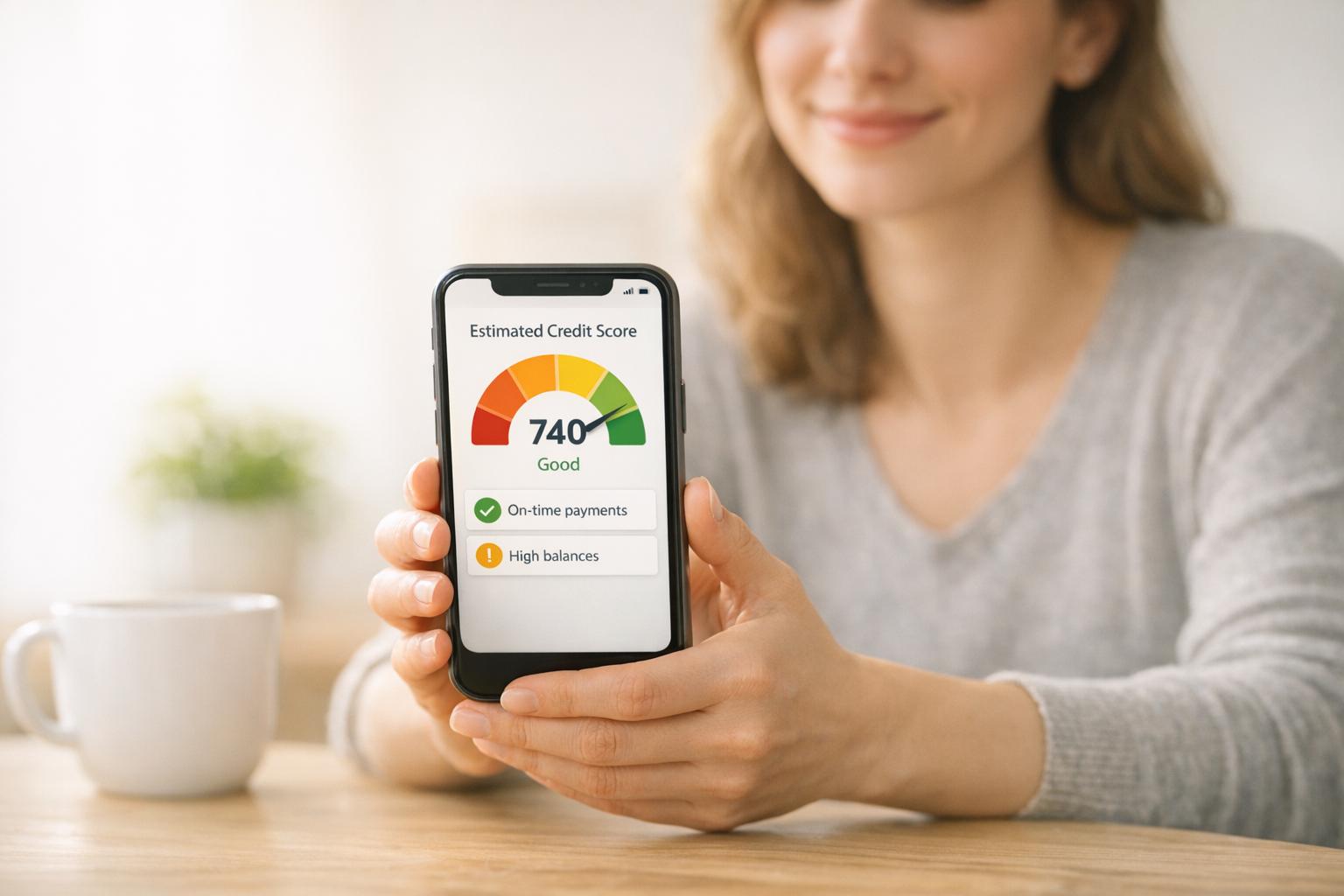
Understand Where Your Credit Stands
A credit score estimator can be a helpful starting point if you want a quick sense of your financial standing before applying for a loan, credit card, or apartment. While it won’t replace an official score from a major bureau, it can show how the biggest credit factors work together and where your profile may fall within a typical scoring range.
What This Tool Looks At
This estimator focuses on the factors people can understand and act on: payment history, credit utilization, length of credit history, total accounts, and recent inquiries. Those areas mirror the building blocks used in many scoring systems. If your payments are consistent and your balances stay low relative to your limits, your estimate will usually trend higher.
Why It’s Useful
A solid credit score estimator doesn’t just give you a number. It helps you connect everyday financial habits to your potential score. That makes it easier to spot issues, like high utilization or too many recent applications, before they create bigger problems.
Build Better Credit Habits
Use this tool as a reality check and a planning aid. A stronger score often starts with simple moves: paying on time, reducing balances, and giving your accounts time to mature.
FAQs
How accurate is this credit score estimator?
This tool provides an educated estimate, not an official credit score from a bureau or lender. Real scoring models use many more details, including account types, balances, derogatory marks, and the exact timing of credit activity. Still, it’s a useful way to understand how major factors like payment history and credit utilization can shape your overall score range.
What affects my estimated credit score the most?
Payment history and credit utilization usually carry the most weight, which is why this tool gives them the biggest influence. Late payments can hurt quickly, while keeping revolving balances low compared with your limits can help. The age of your credit history, number of accounts, and recent hard inquiries also matter, but they tend to have a smaller impact than paying on time and managing balances well.
How can I improve my score over time?
Start with the basics: pay every bill on time and work on lowering your credit utilization, especially on credit cards. Avoid applying for too much new credit in a short period, and keep older accounts open when it makes sense, since a longer credit history can help. If your profile is thin, responsibly adding and maintaining a small number of accounts may also strengthen your credit picture over time.